


There is a moment in many faucet projects when the price sheet stops being the most important document. It may happen in a hotel mock-up room, when the installer lies on his back under a narrow vanity and cannot get a clean angle on the fixing nut. It may happen on an apartment site, when a crew discovers that the sink drawing and the real cabinet do not leave the same amount of working space. Or it may happen months later, when a property manager calls because a loose faucet is not easy to tighten without opening half the cabinet.
That is usually why the top fixed faucet question comes up. The phrase sounds like a product feature. On site, it is really a labor question: can the crew fasten the faucet without fighting the cabinet, and can the maintenance team tighten or replace it later without turning one loose handle into a small repair job?
AQBATH presents top fixed and quick-install faucet options for hotels, apartments, contractors, distributors, OEM projects, and private label buyers. For a buyer, the useful part is not the marketing phrase by itself. The useful part is what can be confirmed before the order: hole size, deck thickness, installation sequence, mounting parts, finish, certification, packing, spare parts, and the factory's ability to repeat the approved sample.
This guide is for the people who still have to answer for the faucet after the quotation is signed: importers, hotel bathroom teams, apartment developers, project contractors, distributors, and brand owners looking for a dependable faucet manufacturer rather than a one-time catalog quote.
A Buyer Scene Worth Imagining First
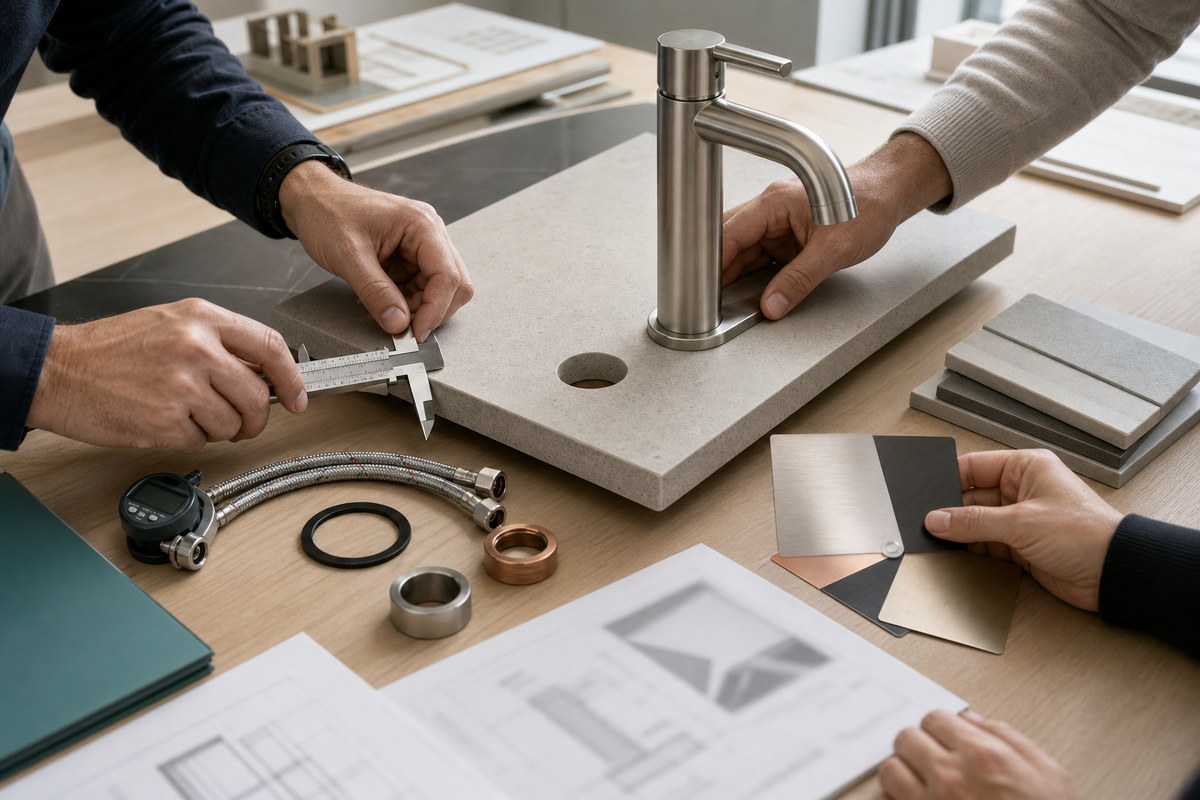
Imagine the mock-up table before the purchase order exists. There is a countertop sample on it, maybe a basin, maybe a kitchen sink, a faucet sample still carrying a little packing dust, two hoses, a rubber gasket, a small bag of fixing parts, and a folded instruction sheet. Someone from purchasing is checking the quotation. Someone from the project side is looking at the schedule. The installer is not admiring the finish yet. He is looking at the hole, the deck thickness, and the place where his hand will have to go.
This is the right time to judge a top fixed faucet. Not after the container arrives. Not when the hotel room is already painted. Not when the apartment handover team is asking why the plumber needs more time. At the mock-up table, a buyer can still change the model, ask for a better instruction sheet, request a stronger carton, or reject a mounting kit that is going to confuse people on site.
The first thing I would watch is not the shine of the faucet. I would watch the installer's hands. Does he understand the fixing parts without asking the sales person? Does the gasket sit naturally? Does the tool reach the part it is supposed to reach? Does the faucet stay aligned while it is tightened? If he turns the same piece over twice, that is a note. If he has to guess the washer order, that is another note. Small pauses in a mock-up room are useful. They are much cheaper than pauses on the twentieth floor of a half-finished building.
The second thing is the underside. Top fixing can reduce the fight under the sink, but it does not remove the underside from the job. Hoses still pass through the deck. Water connections still need space. A drawer, drain pipe, disposal unit, shelf, or wall panel can still create trouble. A buyer who only looks at the top of the counter misses half the story.
The third thing is the carton. This sounds dull until a site opens fifty cartons in one morning. Are the parts bags marked? Does the instruction sheet match the actual faucet? Is the finish protected, or can the spout rub against the handle during shipping? Can a warehouse worker see the model and finish without opening every box? Good packing is not glamorous. It is quiet insurance.
This is also where the difference between a seller and a manufacturer becomes visible. A seller may know the model name and price. A manufacturer should know why the mounting kit is shaped that way, which deck range it supports, what can be changed, and which details must stay locked. That is the kind of conversation a project buyer should want before sending money.
For a hotel buyer, the mock-up question is simple: will this faucet keep rooms moving? For an apartment developer, the question is: will this help handover instead of slowing it down? For a distributor, the question is: can my customer understand the product and install it without angry calls? For a private label buyer, the question is: will the product, carton, instruction sheet, and spare part story feel like one controlled brand program?
When those questions are asked early, "top fixed" becomes more than a phrase. It becomes a buying decision that can be tested.
The Short Answer for Busy Buyers
A top fixed faucet deserves a place on the shortlist when two things are true: the work repeats, and the space under the sink is not friendly. Hotel bathrooms, apartment kitchens, builder packages, retrofit programs, and distributor lines are good examples because the same installation method may be repeated many times.
It is not a shortcut around basic checking. The faucet still has to match the basin or sink. Hoses still have to connect cleanly. The fixing kit still has to suit the deck thickness and hole size. A quick installation faucet only earns that name when the quick part is real on the actual site, with the actual countertop, not just in the product title.
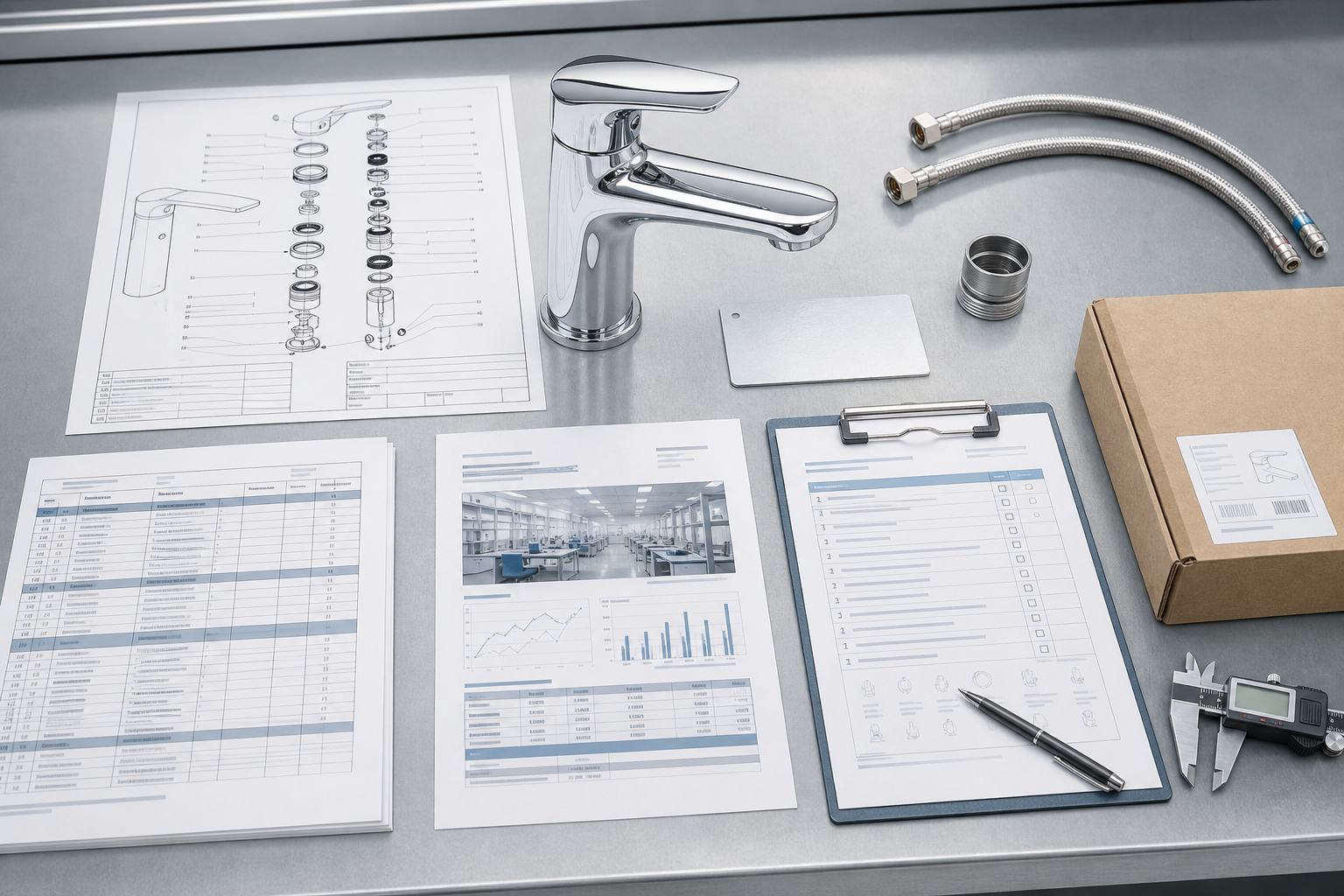
Before approval, collect the boring documents that prevent expensive surprises: drawing, installation guide, sample, packed sample, spare part list, certificate information, and written production standard. If the supplier can explain those details without guessing, the project has a much better chance of moving from sample to bulk order without drama.
What Top Fixed Really Means
In simple terms, a top fixed faucet is designed so the main fixing or tightening step can be handled from above the counter or sink deck. Traditional faucets are often tightened below the deck with a bracket, nut, or fixing set. That can work well when the cabinet is open and the installer has room to move. It is less pleasant when a deep basin, shelf, drawer, trap, wall, or disposal unit blocks access.
The word "top" can be misunderstood. It does not mean the installer never reaches below the counter. Hot and cold supply lines still connect below. Hoses still need a clean route. Leaks still need to be checked. The real value is narrower, and that is fine: above-deck fixing can make the mounting step less awkward and easier to repeat.
That difference matters most when the work repeats. One difficult faucet can be handled by a patient installer. Three hundred faucets turn a small annoyance into a schedule issue. A hotel renovation with tight room turnover does not want installers spending extra time under every vanity. An apartment developer does not want the last phase delayed by a detail that could have been caught in the mock-up room.
Treat "quick installation" as a claim to verify, not a slogan to accept. How do the fixing parts work? Which tool is used? What deck thickness range is supported? What changes if the countertop is stone, stainless steel, composite, or laminated board? A good supplier answers those questions with model-specific details.
The Problem With Buying Only From Product Photos
Faucets photograph well. A polished body, clean handle, and fashionable finish can make almost any model look ready for a hotel, apartment, or retail line. But a project buyer is not buying the photograph. The buyer is buying a working part that has to survive the carton, the installer, the cleaner, the guest, the tenant, and the maintenance call that comes later.
Photos rarely show the fixing point. They do not show how the hose bends below the counter. They do not show whether a mounting washer is easy to identify in the parts bag. They do not show whether a tall basin faucet splashes in a shallow bowl. They certainly do not show whether the second production batch will match the sample.
This is why a project faucet decision should start with the room, not the hero image. What is the basin or sink? What is the deck thickness? What is the mounting hole? Is there a backsplash close to the handle? Is the cabinet open or crowded? Will one contractor install all units, or will several crews work across different floors?
Once those details are known, the product photo becomes useful. Without them, it is just a nice picture with a price.
Where AQBATH's Top Fixed Range Fits
AQBATH's top fixed faucet category gives buyers a focused place to begin. Instead of treating basin and kitchen models as unrelated items, the category brings the installation idea into one product family. That helps when a buyer is comparing bathroom and kitchen specifications for the same hotel, apartment, or distributor project.
For kitchen projects, buyers can review a top fixed kitchen faucet or an easy installation top fixed kitchen faucet with pull-down sprayer. For bathroom programs, the quick installation basin faucet is a practical starting point. For heavy-use dishwashing or foodservice areas, buyers should compare the commercial kitchen faucet series and the C0001CP commercial pre-rinse kitchen faucet.
This path matters because a real buyer rarely wants only one isolated SKU. A distributor may need a basin model, a kitchen model, and a pull-down model in two or three finishes. A hotel may need bathroom faucets now and pantry faucets later. A contractor may need a product family that can be explained to the installation team once, instead of turning every model into a fresh training session.
The first shortlist should answer a simple question: does this model fit the project and can the factory repeat it?
Top Fixed Basin Faucet Notes for Hotels and Apartments
A basin faucet looks small on a purchasing spreadsheet, but it is one of the first parts a guest or tenant touches. A handle that feels loose, a spout that splashes, or a finish that looks different from the approved sample will be noticed quickly.
For a hotel bathroom, start with the basin on the table. Check bowl depth, rim shape, deck thickness, mounting hole, spout reach, and water landing point. A shallow basin with a long spout can splash even when the photo looks elegant. A deep basin with a short spout can feel cramped. A tall faucet needs a real water test before anyone falls in love with the silhouette.
Handle feel should be tested by hand, not guessed from a photo. Too stiff feels like a defect. Too loose feels cheap. In a hotel, senior-care apartment, serviced apartment, or rental bathroom, that small feeling affects trust in the room.
Finish choice also deserves a sober conversation. Chrome, brushed nickel, matte black, brushed gold, and custom finishes do not age in the same way. Cleaning chemicals, hard water, and housekeeping routines can change how a surface looks after handover. The supplier should explain what finish is suitable for the target market and what cleaning method should be avoided.
Buyers searching for a bathroom faucet manufacturer, basin faucet manufacturer, single hole basin faucet supplier, or tall basin faucet manufacturer need more than a catalog page. A drawing, sample, packed sample, finish reference, and spare part plan will tell much more than a clean white-background photo.
The buyer should also check packaging before the order becomes urgent. Many basin faucet problems begin before the faucet reaches the vanity. A weak inner box, loose parts bag, unclear instruction sheet, or missing washer can waste installer time even when the product itself is acceptable.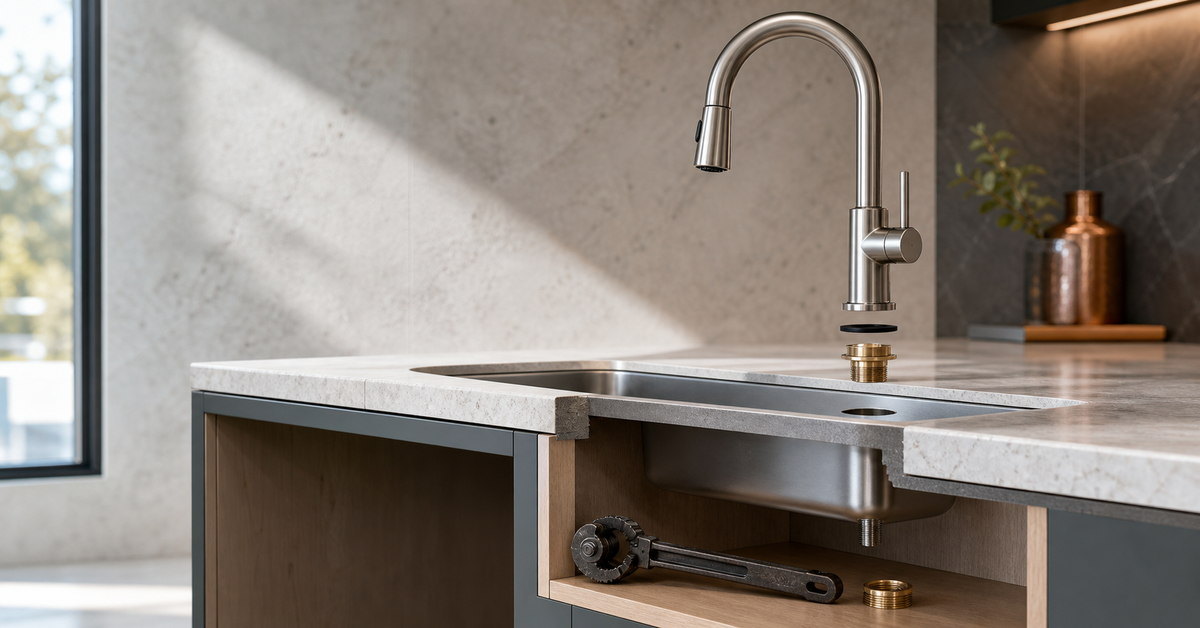
Top Fixed Kitchen Faucet Notes for Builders and Distributors
Kitchen faucets have a harder daily life than their showroom photos suggest. Users swing the spout, pull the spray head, wipe the surface, fill pots, rinse sinks, and judge the handle in a few seconds. In apartments, rental units, builder packages, and light commercial kitchens, the faucet has to install cleanly and keep working without constant attention.
A top fixed kitchen faucet makes sense when above-deck access can reduce mounting frustration. Still, the buyer needs to test the whole movement. Pull the hose out. Let it return. Check the docking point. Then open the cabinet and see whether the hose wants to catch on a pipe, shelf, drawer, or waste bin. A faucet that feels smooth on an open test bench may behave differently inside a real cabinet.
For a kitchen faucet manufacturer, the RFQ should include sink depth, countertop material, mounting hole, water pressure range, finish, quantity, market, and any private label requirement. For a pull down kitchen faucet supplier, also ask about hose return, spray head docking, weight system, and packing protection. For a kitchen sink faucet manufacturer, the physical sink drawing is often more useful than a long email.
Foodservice work is different. A normal residential or apartment kitchen faucet should not be pushed into a restaurant dishwashing station simply because it looks strong. Buyers searching for a commercial kitchen faucet manufacturer, pre rinse faucet supplier, or restaurant faucet manufacturer should describe the real environment. A hotel pantry, restaurant back-of-house area, catering kitchen, and apartment kitchen do not place the same load on the faucet.
The Questions I Would Put in the Supplier Email
A supplier can type "quick installation faucet" on a product page in a few seconds. The useful test comes later, when the buyer asks what that phrase means for one exact model. I would put the sample beside the drawing and ask the supplier to walk through the fixing sequence from the first washer to the final water connection.
The drawing does not need to be beautiful. It needs to be usable. The installer should be able to see the hole size, deck thickness range, gasket position, fixing parts, hose route, and the tool that reaches the fixing point. If the drawing leaves those details vague, the sample has to do more of the explaining. If the sample arrives with an unmarked parts bag as well, that is a reason to slow the approval down.
There is another question worth asking: what happens between the approved sample and the second shipment? A top fixed structure still relies on accurate machining, sound threads, a suitable cartridge, an even finish, leak testing, and a final inspection that catches missing parts. The installation idea is helpful, but it cannot compensate for weak control of the basic faucet.
Repeat orders are where this becomes visible. The first carton may contain the right hose and mounting kit. Six months later, a small change to the aerator, carton insert, label, or finish tone can make the next batch look like a different product. Ask which parts are locked, which substitutions are forbidden, and who has to approve a change. That conversation is much easier before the purchase order is released.
This is the practical difference between a listing and a factory relationship. A dependable faucet supplier should be able to discuss the model, the packing, the documents, and the spare parts in the same conversation. A low quotation from a casual seller may still be attractive, but it becomes less attractive when the project needs a repeat batch or a replacement part with a known code.
Materials and Certification: Read the Fine Print
Material is something a buyer feels before it becomes a line in a report. Pick up two samples and the difference in weight and machining can be obvious. That does not prove everything, but it is a useful first signal. Brass is still preferred for many project faucet bodies because it gives a firm base for machining and finishing.
A brass faucet manufacturer should be willing to identify what is brass and what is not. Ask about the visible body, internal waterway, mounting parts, cartridge, aerator, hose, and finish process. The answer should not turn every component into "brass" just because the word sounds reassuring.
The same care is needed with lead-free language. A lead free faucet manufacturer should connect the claim to a market, a standard, and a model. One company statement may not cover every SKU, finish, connector, or destination. For a project that will be inspected by an engineer or public buyer, model-level paperwork is worth requesting early.
On North American jobs, the cUPC and lead-free discussion usually starts earlier than buyers expect. I have seen projects slow down over one small mismatch: the catalog said one thing, the certificate showed another model family, and the engineer would not sign the submittal until the names lined up. That is why a cUPC faucet manufacturer needs to connect the certificate to the actual SKU, not only to a general product range.
When reviewing the document, look at the certificate holder, covered model list, product description, issue date, expiry status, and the market it supports. AQBATH's About Us page lists ISO9001, ISO14001, CUPC, NSF, CE, WaterMark, and SNI certifications, so it is a useful place to begin the check. After that, ask for the paper that belongs to the quoted faucet and the destination market. It is a small request, but it keeps the conversation real.
This is not office paperwork dressed up as quality control. For a distributor, the right certificate can decide whether the product is listed. For a contractor, it can decide whether the engineer accepts the submittal. For a hotel or apartment project, it can decide whether the room package closes cleanly or sits in a folder waiting for one missing file. The painful version is discovering the gap after samples are approved or production has started.
Choose the Factory Support You Actually Need
Many RFQs get messy because the buyer writes "custom" when the request is actually much simpler. Sometimes it means a logo on an existing model. Sometimes it means a carton change. Sometimes it means a new spout, a new mounting part, or a finish that must match an architect's board. Those requests may sound close in an email, but they do not create the same factory work.
When the buyer already has a drawing, an approved sample, a fixed finish, or a strict installation requirement, the conversation is usually OEM. An OEM faucet manufacturer is being asked to hold a defined product steady. I would ask one blunt question here: if we repeat this order six months later, which parts are locked and which details might move?
ODM is more useful when the buyer wants speed without starting from a blank sheet. An ODM faucet supplier can begin with an existing AQBATH platform, then adjust finish, accessories, packing, or presentation. This route often fits a distributor preparing a product family before a sales season, because the buyer can spend time on market fit instead of basic product engineering.
Private label is really about what the buyer's customer sees. A private label faucet manufacturer may supply the faucet, but the brand feeling is built through the carton, barcode, instruction sheet, spare part names, logo placement, and after-sales information. If the handle carries the logo but the carton looks anonymous, the job is only half done.
A custom faucet manufacturer is needed when the request changes the structure, component choice, finish system, or installation method. That can be the right move, especially for a hotel group or distributor with a long program, but it needs a drawing, sample schedule, and approval point. Treating a structural change like a stock item with a sticker usually leads to a confused quote.
The cleanest first email names the route plainly: existing model with private label carton, OEM to our drawing, ODM based on AQBATH's top fixed range, or custom spout development. A factory can quote that kind of message much faster than a vague request for a special faucet.
Put the Useful Details in the First RFQ
The best RFQ is not the longest one. It is the one that lets the supplier picture the job without guessing. A short message can do that if it gives the facts a quotation team actually uses.
For example: "We are sourcing a top fixed basin faucet for a 260-room hotel renovation. The first review sample is needed this month. Brushed nickel is the target finish. The basin drawing is attached, and the bulk order will follow mock-up approval." That opening is plain, but it tells the factory the product, project type, timing, finish, and approval path in a few lines.
The next part should explain the commercial shape of the order. Is the quantity a trial, one building phase, or a yearly distributor forecast? Which market will receive the goods? That one line can change certification, connector type, instruction language, carton marks, and packing. A restaurant back-of-house faucet and an apartment kitchen faucet should not be treated as the same request simply because both sit near a sink.
Installation details are often the quickest way to reach a useful quote. Send the sink or basin drawing, mounting hole, deck thickness, counter material, cabinet limits, and a site photo if one exists. If the drawing is not ready, say that honestly and give approximate dimensions. A good supplier can tell you what is still missing before the sample is chosen.
Packaging should be in the same email, especially for distributors and private label buyers.Neutral cartons, project cartons, retail boxes, branded cartons, barcodes, instruction language, spare part labels, and carton marks all affect the real order. Leaving them for later can make the first quote look cheaper than the finished program.
| Detail to include | A useful example | Why it changes the quote |
|---|---|---|
| Project and quantity | 260 hotel rooms; first batch for mock-up | Shows whether the request is a sample, one phase, or a repeat program |
| Product and installation | Top fixed basin faucet; 35 mm deck; one hole | Helps the supplier check fit instead of guessing from a photo |
| Market and documents | North America; cUPC and lead-free documents | Determines the certification and paperwork discussion |
| Finish and packing | Brushed nickel; private label carton | Sets the finish reference and packaging workload |
| Timing and service | Sample this month; spare parts for handover | Makes the response useful to the project schedule |
A serious project faucet supplier should welcome this information. It gives the quotation somewhere solid to start, and it gives the buyer a written record of what was actually requested.
Buyer Paths by Product Type
Different buyers arrive at AQBATH with different search phrases. The useful thing is to connect each phrase to the right next step.
If the buyer is still checking factory background, start with AQBATH as a China faucet factory. Review the factory profile, certification information, production capability, and export experience before falling in love with one model photo. Buyers using searches like bathroom faucet supplier China, bathroom hardware supplier, or general faucet manufacturer terms are usually better served by confirming the supplier base first, then narrowing the product.
For bathroom programs, compare AQBATH as a bathroom faucet manufacturer, then move toward basin faucets and top fixed options. A hotel buyer should treat AQBATH as a hotel bathroom faucet supplier and send the room count, basin drawing, finish target, spare part requirement, and schedule in one message. For public washrooms or business projects, a commercial bathroom faucet manufacturer should be judged on serviceability and documentation as much as appearance.
For kitchen programs, begin with the kitchen faucet manufacturer category and then narrow the use case. Apartment kitchens, private label retail lines, pull-down products, and commercial pre-rinse stations need different tests. A distributor may care about several finishes and price levels. A contractor may care more about packing and installation instructions than a retail buyer does.
For shower-related work, a buyer searching shower faucet manufacturer should still provide installation condition, pressure requirement, finish, market, and project type. The same buying logic applies: a style photo is not enough for a controlled order.
Sample Testing Should Feel Like a Small Jobsite
A sample should not sit on the meeting room table like a trophy. Treat it as the smallest version of the real jobsite.
Open the carton the way an installer would open it on a busy morning. Are the parts easy to identify? Does the instruction sheet match the actual product? Are washers, mounting parts, hoses, and tools packed in a way that makes sense? If a buyer has to search for one small part on a clean office table, the jobsite version will be slower and messier.
Install the faucet on the real sink if possible, or on the closest mock-up you can build. Run water. Watch where the stream lands. Move the handle several times. If it is a kitchen model, pull the spray hose out fully and let it return. Then look below the counter instead of stopping at the top view. Does the hose rub? Does it bend too sharply? Could it catch on a drawer rail, trap, shelf, or waste bin? For a hotel or apartment project, let the maintenance or installation person handle the sample. They often spot the awkward detail purchasing misses.
Check the finish in more than one light. Office light, warehouse light, hotel bathroom light, and retail display light can make the same finish look different. For a custom finish, keep an approved master sample with the buyer's signature or approval note. That small habit can prevent a large argument later.
Ask for a packed sample, not only a loose sample. Export packing, inner protection, label clarity, and accessory control affect the real order. A faucet that reaches the site scratched or missing a washer is not a successful product, even if it looked beautiful in a showroom.
Finally, ask how the approved sample will be repeated. Which parts are locked? Which changes require approval? How will the finish be compared? How will accessories be checked? A project order needs the answer before mass production.
Common Mistakes That Make a Cheap Faucet Expensive
The first mistake is choosing only by unit price. A slightly cheaper faucet can become expensive if it adds installation time, arrives with weak packaging, needs repeated service, or disappears from the catalog before the second order.
The second mistake is treating installation as the contractor's problem. For a project order, installation is part of the product value. If a top fixed faucet reduces awkward work and creates a repeatable method, that may save more money than a small price difference on the quotation.
The third mistake is ignoring sink and basin compatibility. Above-deck fixing does not solve every geometry problem. The faucet still needs the right reach, height, base footprint, hole fit, handle clearance, and water landing point.
The fourth mistake is mixing very different products in one vague RFQ. A bathroom basin faucet, home kitchen faucet, pull-down kitchen faucet, commercial pre-rinse faucet, and shower faucet may all belong to the same building, but they should not be quoted as one unclear item.
The fifth mistake is approving the sample without locking the production standard. Finish, cartridge, hose, mounting kit, aerator, instruction sheet, carton marks, logo, barcode, MOQ, lead time, and spare part list should be settled before the order becomes urgent.
After-Sales Planning Before Production
After-sales planning should begin before the order is placed. It is much easier to agree on spare parts while everyone is calm than after a hotel room, apartment unit, or restaurant kitchen has a problem.
Ask which parts are normally requested after installation. A basin faucet may need cartridges, aerators, flexible hoses, handle screws, and mounting kits. A pull-down kitchen faucet may need spray heads, hoses, docking parts, and weights. A commercial pre-rinse faucet may need spray valves, springs, hoses, wall brackets, and repair kits.
Part names and codes matter. If the spare part can only be described as "the small ring from the second bag," reordering will be painful. Ask for a simple spare part list with photos, names, and codes.
Finish replacement should also be discussed. Chrome is easier to match than some brushed or colored finishes. Brushed gold, matte black, and custom colors need an approved reference. If the factory changes the tone later, a replacement part may look wrong even if it functions correctly.
Good packaging reduces after-sales trouble before the faucet is installed. Strong cartons, clear labels, stable inner supports, organized accessories, and readable instructions all reduce hidden cost.
When the Top Fixed Choice Is the Right Choice
The top fixed choice makes the most sense when the site creates access pressure. Tight hotel vanities, apartment cabinets, kitchen sinks with limited underside space, renovation work, and repeated room packages are natural candidates.
It also makes sense when the buyer needs a selling point that can be demonstrated. A distributor can show the above-deck fixing concept to customers. A contractor can train crews around a clearer method. A private label brand can explain installation convenience without inventing a feature that does not exist.
It is less useful when the sink, deck, or market requirement is not yet known. If the hole size is wrong, deck thickness is outside range, certification is not covered, or finish requirement is unrealistic, the top fixed structure will not save the order.
The best supplier response is not always "yes." Sometimes the best answer is "this model fits" or "this model does not fit" or "we need the drawing before quoting." That kind of answer may feel slower at first, but it protects the buyer.
What to Send AQBATH for a Faster Quote
If you want AQBATH to recommend a top fixed faucet accurately, send the project information in one message. Include the product type, project type, quantity, market, finish, sink or basin drawing, mounting hole, deck thickness, certification requirement, packing requirement, and target delivery date.
For a bathroom or hotel inquiry, add the room count, basin style, finish standard, and spare part expectation. For a kitchen inquiry, add sink depth, countertop material, pull-down requirement, and whether the faucet is for residential, apartment, light commercial, or foodservice use. For private label work, add logo, carton, instruction language, barcode, and brand requirements.
If you do not have all the information, send what you have. A sketch, photo, or rough site note is still better than a single sentence asking for the best price. A factory can ask better follow-up questions when the first message has some real project context.
A More Realistic Way to Run the Mock-Up
The mock-up stage is where a lot of faucet decisions become clearer. It does not have to be complicated, but it should be treated as more than a photo session. Put the faucet, sink, counter sample, hoses, mounting kit, instruction sheet, carton, and parts bag on one table. Then let the people who will actually use the information look at it: purchasing, project management, installer, quality control, and, if the job is a hotel or serviced apartment, someone from maintenance.
The first few minutes are usually simple. Everyone checks whether the faucet looks like the approved style. The finish is compared with the sample board. The handle is moved. The spout is turned. Someone checks whether the packaging looks clean enough for the channel. That part matters, but it is not the whole review.
The more useful part starts when the faucet is installed on a mock-up deck. One person should read the instruction sheet without help. Another person should watch whether any step causes hesitation. If the washer order is confusing, write it down. If the hose has to twist to pass through the hole, write it down. If the top fixing part needs a tool that is not included, write it down. These small notes are not complaints. They are the cheapest way to improve the order before bulk production.
For a top fixed basin faucet, run water and look at the bowl. Does the stream land in a comfortable place, or does it hit too close to the front? Does the handle clear the wall or mirror? If the project uses a narrow vanity, can the installer still reach the water connections below? The top fixing method may reduce one awkward step, but the lower connections still need to be practical.
For a top fixed kitchen faucet, the test should feel like a real kitchen for a few minutes. Pull the spray hose fully out, not just halfway. Let it return several times. Move the spout from side to side. Open the cabinet door and check what the hose might touch. A hose that catches on a drawer rail or drain pipe will become annoying later, even if the faucet looks perfect on the counter.
For hotel projects, add one extra question: what happens if this room needs service at 9:30 in the morning and the next guest checks in at 2:00? That question changes the review. Suddenly spare parts, access, finish consistency, and a clear installation method feel less like paperwork and more like room revenue protection.
For distributors, the mock-up should also test the sales story. Can a salesperson explain the top fixed feature in one minute without making unsupported claims? Can the carton label help warehouse staff identify the model and finish? Can the instruction sheet reduce returns from customers who are not professional installers? A product that is easy to explain is often easier to sell.
The result of the mock-up should be a short approval record. It does not need to be a long engineering report. A buyer can record the approved model, finish, carton, accessories, installation result, water test, spare parts, and any changes required before mass production. That record is useful when the second shipment is ordered and nobody remembers exactly which detail was approved six months earlier.
How Buyers Can Compare Two Similar Quotations
Two faucet quotations can look almost equal when they are printed on one page. The difference usually appears in the attachments, the packing photo, and the way the factory answers a second question.
One quote may be for a bare faucet with standard export packing. Another may include better hoses, a clearer instruction sheet, stronger carton protection, a branded box, spare parts, certificate copies, and a finish sample that the production team will use as the reference. If both prices are placed in one spreadsheet without those notes, the cheaper line can look better than it really is.
I would compare the two offers the same way a site team compares two mock-up samples: one detail at a time, not by mood. Put the cartridge, hose length, connection type, finish, mounting kit, carton style, label, certificate, spare parts, sample cost, and lead time in the same row. Then ask which details are confirmed and which are still estimates. The answer may matter more than the first price.
The quality of the reply is part of the quotation too. A factory that asks for the basin drawing, market, deck thickness, and packing target is not being difficult. It is trying to keep the order from becoming a guess. A very fast price can be useful for screening, but if it ignores the installation condition and the certificate requirement, it should not be treated as a finished offer.
For private label work, the hidden work is often outside the faucet itself. Logo position, carton artwork, instruction layout, barcode handling, box strength, and spare part names all affect the customer's impression. A product can look fine on the counter and still feel poorly controlled when it reaches the warehouse.
Hotel and contractor buyers should also look at support after delivery. A simple installation video, a drawing that uses the same model name as the packing list, and spare parts that can be ordered by code will not make the product look more glamorous. They do make the next service call shorter.
What Makes the Inquiry More Likely to Get a Serious Reply
Factories see many short messages every week. Some are serious projects. Some are price fishing. A buyer who gives context in the first message usually receives a better answer because the sales engineer can see where the product has to work.
A hotel inquiry can be short and still useful. For example: "We are reviewing top fixed basin faucets for a 260-room renovation in the Middle East. Brushed nickel is preferred. The basin drawing is attached. We need one sample this month and will place the bulk order after mock-up approval." That message gives AQBATH enough to suggest models, drawings, packing, spare parts, certificate information, MOQ, lead time, and price without starting from a blank page.
A distributor's message may sound different: "We are preparing a private label kitchen faucet line for apartment and retail customers. We need a top fixed kitchen faucet and one pull-down model. Chrome and matte black are the first finishes. Please quote neutral packing and branded carton options." This kind of note tells the factory the channel, product family, finish plan, and packaging direction in one pass.
For restaurant or commercial kitchen work, describe the real use before asking for a model. A staff pantry, a catering kitchen, and a dishwashing station do not need the same faucet. If the buyer only says "kitchen faucet," the answer may come from the wrong product group. If the buyer explains the sink, workload, and cleaning routine, AQBATH can decide whether a commercial pre-rinse faucet is needed.
The best inquiry is the one that removes guessing. A drawing, photo, quantity, market, finish, packing note, certificate request, and delivery target can save several rounds of email. More importantly, they make the buyer look ready to place an order, not just collect a price.
Final Buying Advice
A top fixed faucet is worth attention because it touches a real jobsite problem: access. When a cabinet is tight, when a hotel room has to be turned quickly, or when hundreds of units repeat the same installation, a small improvement in the fixing method can matter.
Still, the phrase "quick installation" should never carry the whole buying decision. The faucet has to fit the sink or basin. The finish has to match the approved sample. The certificate has to cover the market. The carton has to protect the product. Spare parts have to be named clearly enough that the buyer can reorder them later.
AQBATH's role is to connect the product feature with project pressure. Hotels need consistent rooms and faster maintenance. Apartments need smoother handover. Contractors need a repeatable installation method. Distributors need a product story that sales teams can explain. OEM and private label buyers need a factory that keeps the approved details stable after the sample looks right.
If you are comparing top fixed faucets for a hotel, apartment, contractor, distributor, OEM, ODM, or private label order, send the project details you already have. AQBATH can then recommend the right top fixed basin faucet, top fixed kitchen faucet, pull-down kitchen faucet, commercial kitchen faucet, or related bathroom hardware option with fewer guesses and a better chance of moving toward a real inquiry.