

What buyers really mean when they search for a bathroom faucet manufacturer
When sourcing teams look for a bathroom faucet manufacturer, they are rarely shopping on appearance alone. They are trying to solve a tougher set of problems: consistent quality, dependable metal finishing, stable supply, and a product that installs cleanly without turning into a warranty headache. That is true whether the faucet ends up in a hotel bathroom, a residential project, or a retail private-label line.
The search often starts with a simple question: who can make the faucet, and who can make it the same way every time? That is why buyers also compare a faucet manufacturer China, a brass faucet manufacturer, a kitchen faucet manufacturer, or an OEM faucet manufacturer depending on the product family and the sourcing model.
Why the manufacturer choice matters more than the spec sheet
A faucet is not just a valve with a handle. It is a small assembly of metal forming, internal cartridge performance, seals, plating or surface finishing, hose management in some models, and packaging that has to survive long logistics chains. If one of those pieces is weak, the failure may not show up until installation or, worse, after the project is handed over.
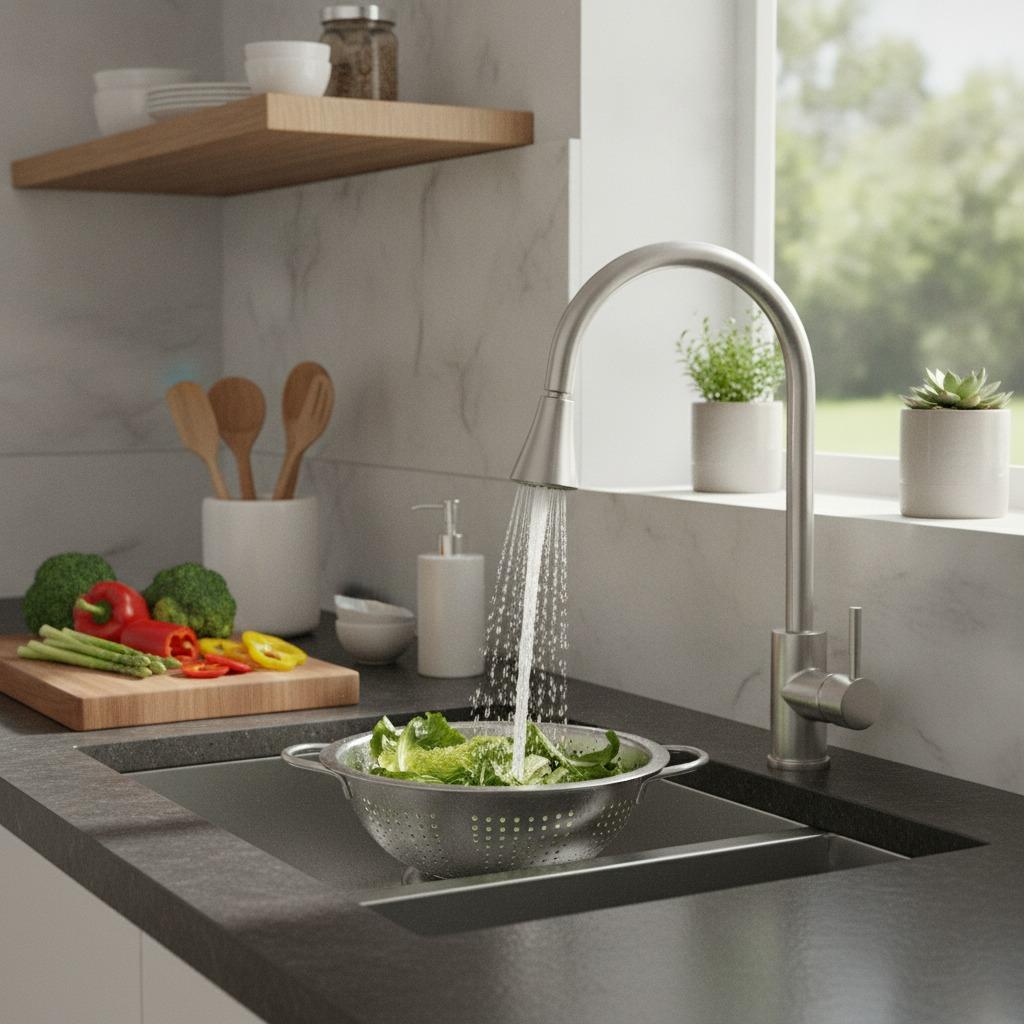
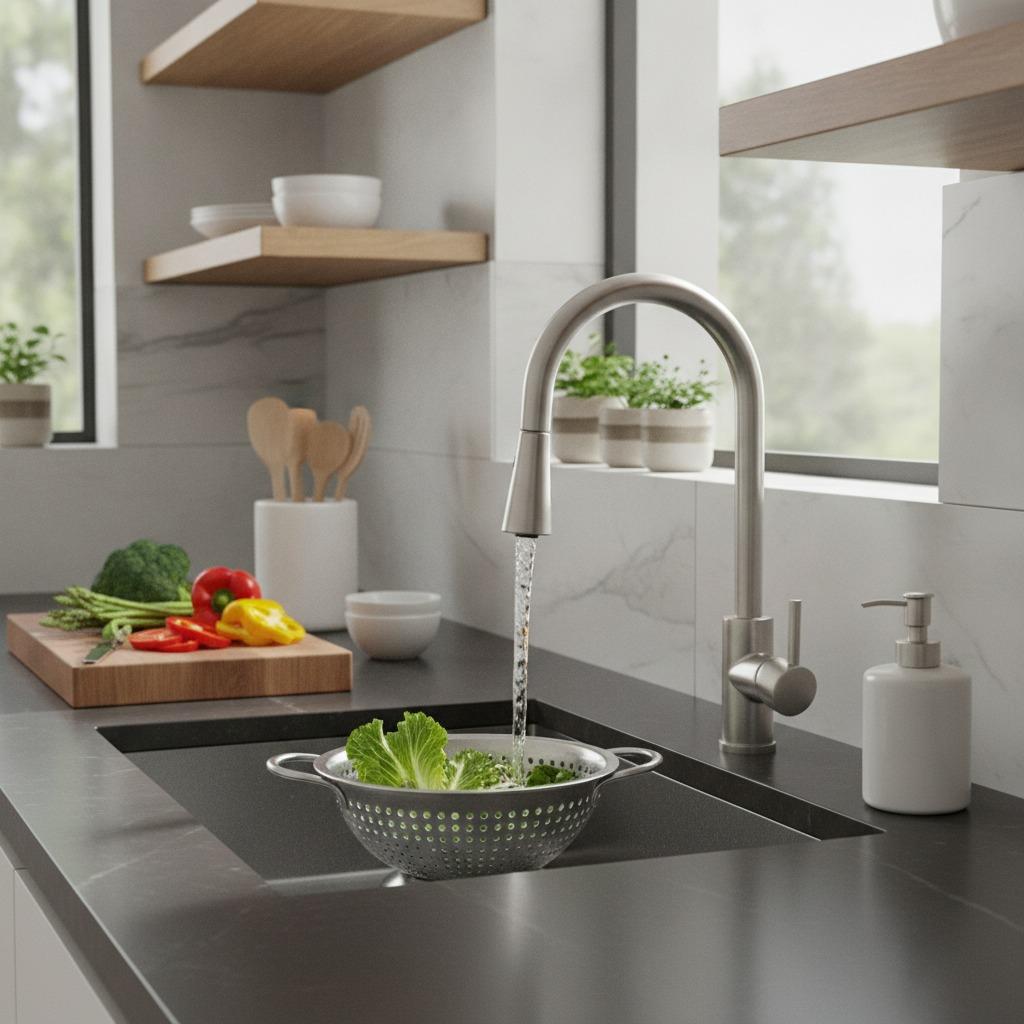
For bathroom products, buyers usually care about appearance and touch points as much as function. For kitchen products, the demands are a little harsher. The attached product example here, a pull-down kitchen sink faucet with a high-arc spout and single-lever control, shows the kind of design that has become standard because it helps with rinsing produce, washing dishes, and filling pots without fighting for clearance. Those same expectations increasingly influence bathroom lines too: cleaner silhouettes, easier cleaning, and less visible hardware.
What to compare across faucet suppliers
The best way to evaluate a supplier is to separate the glamorous parts from the practical ones.
Material and construction
A brass faucet manufacturer may be preferred for durability and the familiar feel of brass bodies, while other suppliers may offer different metal constructions depending on market positioning. The key point is not the label alone, but whether the material system fits the application, finish, and compliance needs of the buyer’s market.
For bathroom faucets, buyers should ask how the body is cast or machined, how the finish is applied, and how the manufacturer controls consistency across batches. Visual uniformity matters in a hotel project; dimensional consistency matters in replacement programs. Neither is optional.
Cartridge, spout, and handle behavior
The cartridge is where a lot of real-world quality lives. A stiff handle, a loose lever, or a drip after repeated use can damage a product line faster than a cosmetic complaint. Pull-down kitchen models add another layer: hose retraction, spray head feel, and connection durability. Even if you are sourcing a bathroom line, the same discipline applies—test the moving parts, not just the finish sample.
Finishing and surface quality
Finishing is often where suppliers separate themselves. Matte, brushed, polished, or coated surfaces each carry their own tradeoffs. Buyers should confirm what finishing process the manufacturer uses, how color consistency is checked, and how surface defects are handled before shipment. It is tempting to approve a sample based on showroom appeal. That can be a mistake if the production lot later shows inconsistent tone or visible marks.
OEM sourcing: where the details become commercial
An OEM faucet manufacturer is usually expected to do more than build to a drawing. Many buyers need support with minor design adjustments, packaging, logo placement, and market-specific configuration. That sounds straightforward until you get into faucet bodies, internal parts, hose routing, and installation accessories.
This is where the difference between a competent factory and a true partner becomes visible. Can the supplier adapt the product without forcing a complete redesign? Can they keep the look intact while changing handle geometry or mounting details? Can they speak clearly about what is fixed and what is flexible? Those questions save time later.
Common sourcing mistakes
One common error is choosing only on finish. A faucet can look excellent in a photo and still be difficult to install or disappointing in daily use.
Another is assuming all faucets from a given factory are built to the same standard. A supplier may be strong in one category, such as a kitchen faucet manufacturer line with pull-down spray heads, but less suitable for a bathroom assortment that needs a different size profile, handle feel, or design language.
A third mistake is under-specifying the project. If the buyer does not define the expected installation type, finish family, packaging method, and market use case, the supplier may quote something technically plausible but commercially off target.
Practical buying advice for engineers and sourcing teams
Start with the end use. A residential vanity faucet, a hospitality bathroom faucet, and a retail private-label product do not have the same priorities. Then ask for sample consistency, not just a single hero sample. If possible, review installation fit, lever action, hose behavior where relevant, and finish appearance under normal lighting.
If you are comparing a bathroom faucet manufacturer with a broader faucet manufacturer China shortlist, do not stop at catalog breadth. Ask which product family they produce most consistently and how they manage quality between styles. A wide catalog is nice; repeatable execution is what keeps programs alive.
FAQ: quick answers buyers usually need
Is a brass body always better?
Not automatically. Brass is often valued for durability and the way it supports premium positioning, but the right choice depends on design, finish, market, and cost structure.
Should bathroom and kitchen suppliers be treated as interchangeable?
Usually no. A kitchen faucet manufacturer may excel at pull-down systems and higher-clearance spouts, while bathroom lines may prioritize a smaller footprint and different visual balance.
What matters most in OEM work?
Clear communication on fixed dimensions, finish targets, packaging, and testing expectations. Ambiguity is expensive.
What to do next
If you are narrowing a supplier list, build your comparison around real use, not just catalog claims. Ask for samples, installation details, and finish descriptions that match your market. The right bathroom faucet manufacturer should be able to show control over appearance, mechanics, and repeatability, not just one of the three.