
What buyers really need from a bathroom faucet factory
When engineers, sourcing managers, and product teams start comparing a bathroom faucet factory, they are rarely just shopping for a metal fitting. They are buying a repeatable manufacturing process, a stable finish, and a supplier that can hold design intent across batches. That is especially true in projects that also involve a bathroom faucet manufacturer or a hotel bathroom faucet supplier, where the same faucet family may need to serve different rooms, different traffic levels, and different installation standards.
The practical question is not “Can they make a faucet?” Most factories can make something that looks right in a photo. The real question is whether they can build a fixture that works smoothly, survives daily use, and fits the buyer’s specification without constant hand-holding.
The product reality: what a modern faucet has to do
The faucet examples in the supplied product data point to the same basic market expectation: a tall, deck-mounted, single-lever faucet with a pull-down spray head and a clean modern finish. Those design cues are common in kitchens, but the manufacturing lessons carry over to bathroom programs as well. Buyers want clean geometry, reliable movement, and a finish that still looks acceptable after repeated use.
A high-arc spout is not just a styling choice. It creates clearance, which matters when the sink area is crowded or when users need to rinse large items. A single lever is another small detail that changes the user experience; one-handed control is easy to explain in a catalog, but it only feels good if the cartridge action is consistent and the handle doesn’t loosen early.
What a capable factory should be able to control
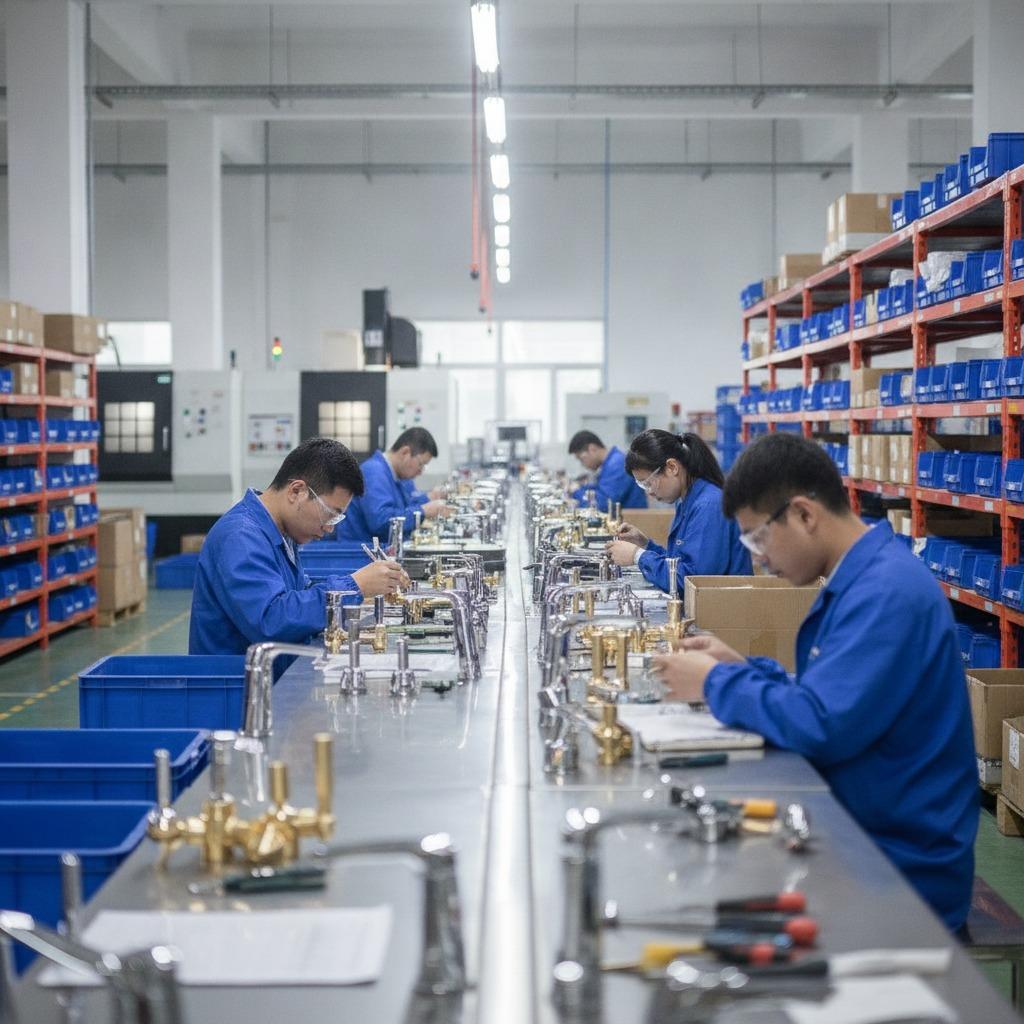
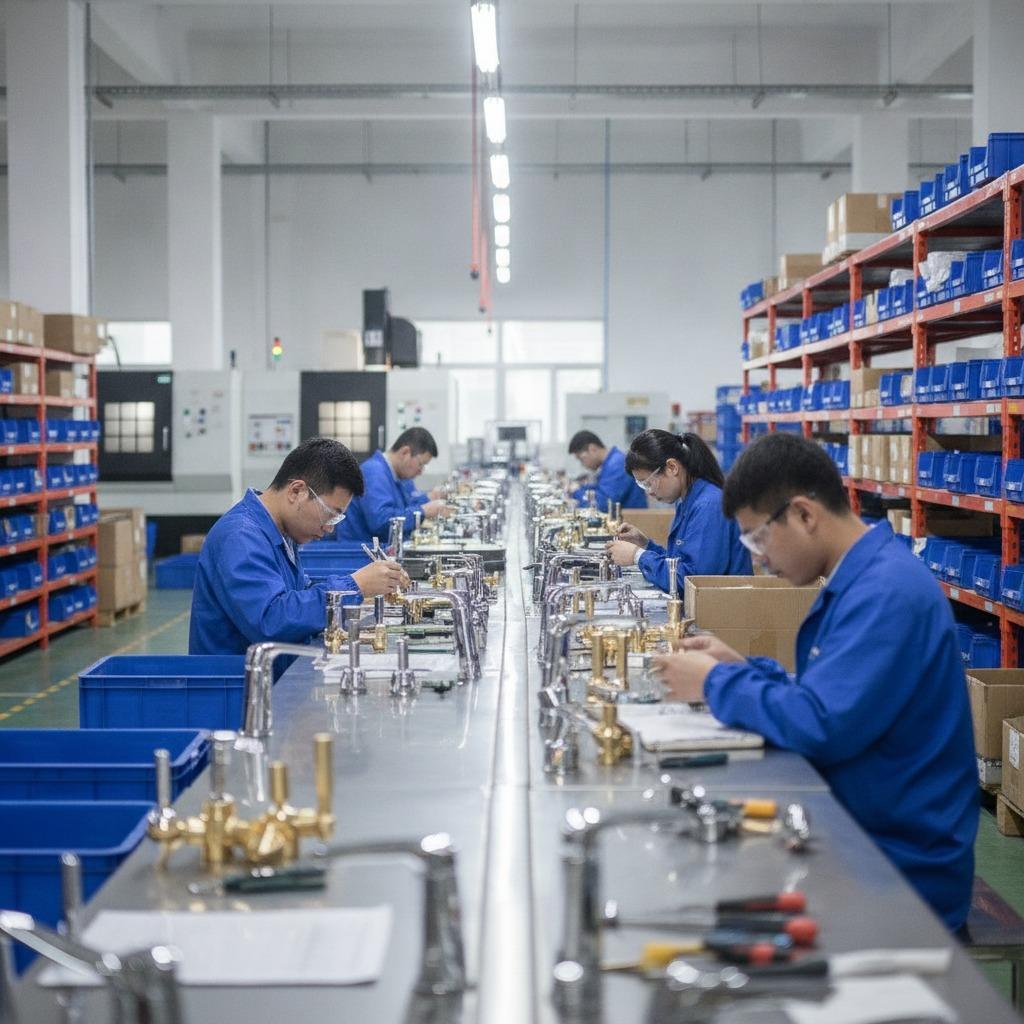
A serious faucet program depends on more than assembly. The factory needs control over forming, machining, finishing, and final assembly. In practical terms, that means the supplier should be able to manage the body shape, the surface condition, and the fit between moving parts without depending on luck.
For buyers, the useful signals are usually straightforward:
- Consistent lever feel across batches
- Clean finish on visible surfaces and around edges
- Reliable hose movement in pull-down designs
- Stable spray-head alignment and docking behavior
- Packaging that protects plated or coated surfaces during transit
That last point is easy to overlook. A faucet can leave the factory looking excellent and still arrive with scuffs if packaging and handling are treated as an afterthought.
How the finish changes the buying decision
The provided product information mentions both dark matte metallic tones and brushed stainless-steel-like finishes. Those are not trivial style choices. They affect the perceived price point, cleaning expectations, and even how forgiving the product is in a real home or hotel setting.
Dark matte finishes can look more contemporary and can visually soften a fixture in a modern interior. Brushed silver or stainless-steel-look surfaces usually read as more neutral and are easier to coordinate with mixed hardware. Neither is automatically better. The better question is whether the factory can reproduce the finish consistently and whether the buyer is clear about maintenance expectations.
A small caution here: finish samples can be misleading. A hand-held sample often looks better than a full production run under different lighting, on a different substrate, or after packaging abrasion. Buyers should ask how the finish is verified in mass production, not just on a showroom unit.
Selection criteria that matter more than the catalog photo
For most procurement teams, the decision comes down to a few practical filters.
1. Product fit
Does the faucet architecture suit the target market? A pull-down spray faucet may be ideal for some applications, while a simpler basin faucet may be enough for others.
2. Manufacturing depth
Can the factory handle multiple body styles, finish options, and assembly variants without drifting off spec?
3. Service consistency
Can they support repeat orders, spares, and packaging revisions without turning every change into a new project?
4. Market positioning
A hotel bathroom faucet supplier may need a different mix of durability, appearance, and procurement simplicity than a residential-oriented bathroom faucet manufacturer.
Common mistakes buyers still make
One common mistake is overfocusing on surface appearance and underfocusing on mechanism quality. Another is assuming that one faucet sample proves the whole line is ready. It does not. Pull-down hose routing, handle stability, and finish durability are all batch-sensitive issues.
Another trap is vague specification language. “Premium finish” and “good quality” do not help a factory. If the buyer wants a brushed look, a matte dark look, or a coordinated soap dispenser, that needs to be stated clearly and checked against production samples.
Practical advice before you place the order
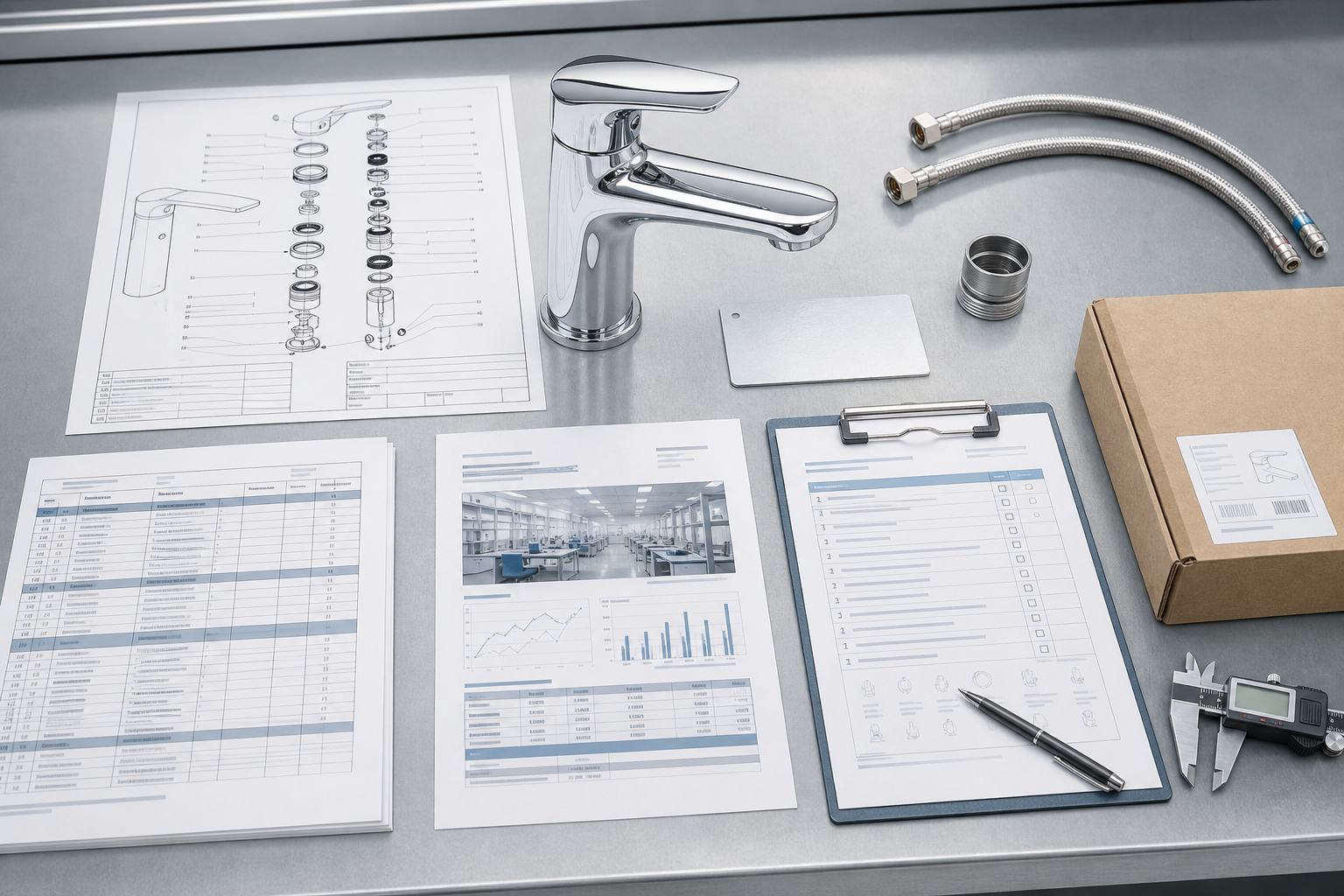
Start by asking the bathroom faucet factory how they manage the visible parts of the process: body manufacturing, surface finishing, assembly, and final inspection. Then ask what can be customized without affecting lead times too sharply. That conversation is usually more useful than discussing marketing features first.
If the project is hospitality-driven, make sure the supplier understands the realities of hotel use: frequent cleaning, heavy rotation, and limited tolerance for cosmetic inconsistency. If the project is residential, think more about user comfort, finish preference, and installation flexibility.
FAQ
Is a pull-down faucet always better?
Not always. It is useful for directed rinsing and reach, but it adds moving parts that need reliable assembly.
Should buyers choose dark matte or brushed metal?
Choose based on the room design, cleaning expectations, and how well the factory can reproduce the finish consistently.
What matters most when comparing suppliers?
Look at manufacturing control, finish consistency, and how clearly the factory can support repeat production.
Where to go next
If you are qualifying a bathroom faucet factory for a new program, treat the first conversation as a production-control review, not just a product pitch. Ask for samples, clarify the finish, confirm the assembly approach, and check whether the supplier can support the exact variant you want to sell. That is usually where the real difference between a promising brochure and a dependable supply chain becomes obvious.
FAQ: Hot and Cold Bathroom Faucet
1. What is a hot and cold bathroom faucet?
A hot and cold bathroom faucet is a mixer faucet that combines hot and cold water supplies to provide adjustable water temperature.
2. Why choose a mixer faucet instead of a cold water faucet?
Mixer faucets provide better comfort because users can adjust water temperature according to their needs.
3. What material is good for hot and cold bathroom faucets?
Brass is commonly used because it provides good strength, durability, and machining stability.
4. Can hot and cold bathroom faucets be customized?
Yes. OEM/ODM customization can include logo, packaging, finish, handle design, and product configuration.
5. Are mixer faucets suitable for hotels?
Yes. They are widely used in hotels, apartments, residential projects, and bathroom renovation applications.
6. How can buyers request a quotation?
Buyers can send product requirements, quantity, finish, packaging, and customization needs through the Contact Us page.
Conclusion: Choose a Reliable Hot and Cold Bathroom Faucet Supplier
A hot and cold bathroom faucet should provide comfortable temperature control, durable materials, attractive design, and reliable long-term performance.
For B2B buyers, supplier capability is just as important as product design. Material quality, cartridge performance, finish durability, testing processes, OEM capability, and production consistency all influence business success.
AQBATH supports global buyers with hot and cold bathroom faucets, OEM/ODM services, and complete faucet manufacturing solutions.
Learn more through the About Us page, explore products through the Products page, read more guides through the Blog / FAQ page, or contact AQBATH through the Contact Us page.