


What buyers really mean when they search for a bathroom faucet manufacturer

A search for a bathroom faucet manufacturer usually isn’t just about finding a supplier who can ship metal parts. Buyers are often trying to solve a bigger problem: how to get a faucet line that looks right, installs cleanly, holds up in daily use, and fits a price target without creating headaches for sourcing or after-sales support. That matters whether the end product is a residential bathroom range, a renovation package, or a broader sanitaryware catalog.
The same sourcing logic also applies when a buyer is comparing a faucet manufacturer China option against regional suppliers. The real question is not only where the factory is located, but whether it can consistently produce the style, finish, and assembly quality the market expects. A polished faucet that photographs well and feels solid in hand can still become a weak link if the cartridge, aerator, surface finish, or mounting interface is poorly controlled.
Why the product details matter more than the label
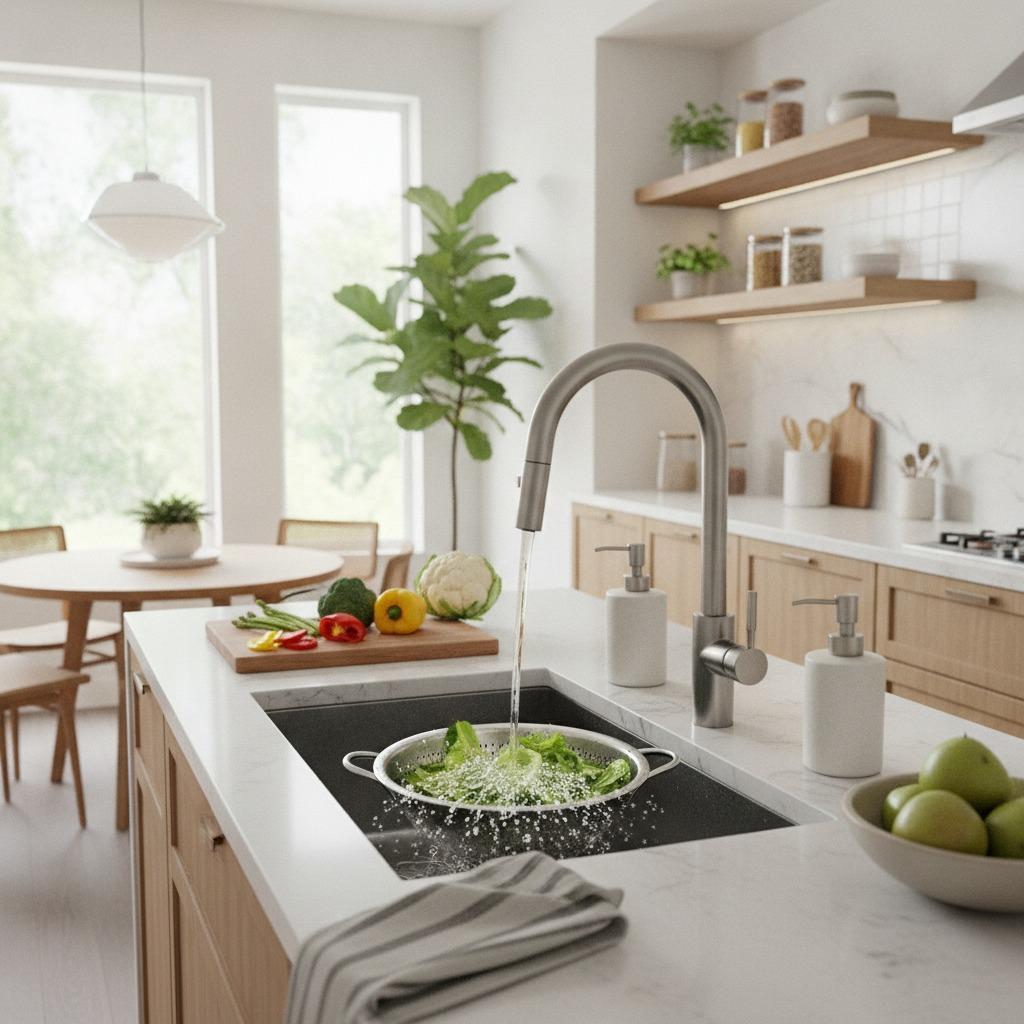
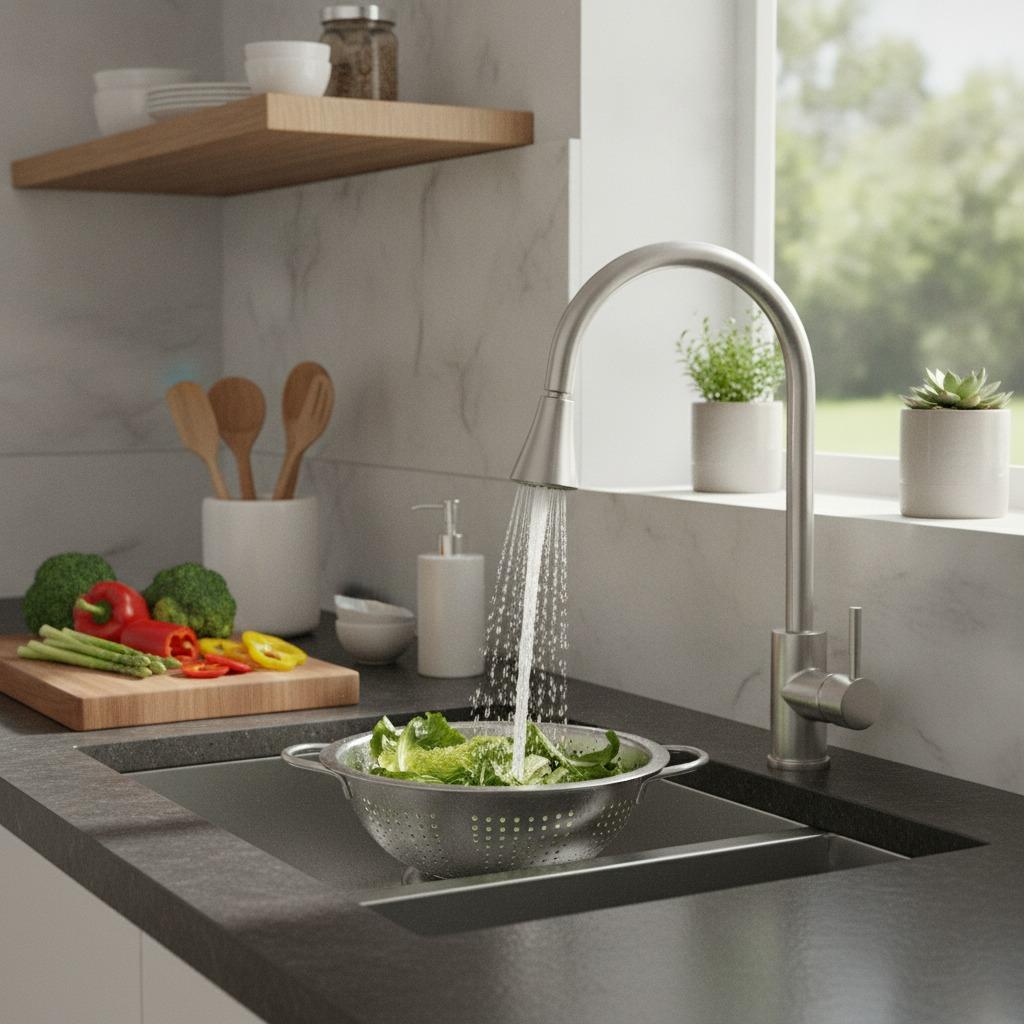
Even though the provided product information describes a kitchen sink faucet rather than a bathroom tap, the manufacturing considerations overlap. The visible product features a tall gooseneck spout, a single lever handle, and a single-hole deck mount. Those are the same kinds of design cues many buyers evaluate across sink-side faucet ranges: clearance, ease of use, and a clean installation footprint.
For a procurement team, this is where a brass faucet manufacturer can stand out. Brass or brass-toned metal bodies are commonly associated with better dimensional stability and a more substantial feel than very light constructions, although exact composition must be confirmed by the supplier. The polished, reflective surface also signals a finish process that has to be handled carefully from casting through machining and plating or surface treatment.
Key takeaways when comparing faucet suppliers
A practical way to shortlist suppliers is to separate looks from manufacturability.
The visible high-arc spout is useful for clearance under the faucet, which matters for washing produce, filling containers, or handling larger items at the sink. A single lever reduces complexity for the user and usually simplifies day-to-day operation. The single-hole mount is also a practical detail because it can reduce installation complexity and supports a cleaner countertop appearance.
Those are not glamorous features, but they are the details that often determine whether a product sells well and returns less often. Buyers should ask whether the supplier can keep the lever action smooth, the spout alignment consistent, and the finish uniform across batches. These are small things on a sample table and large things in production.
What an OEM faucet manufacturer should be able to support
If the project is private label or specification-driven, an OEM faucet manufacturer should be able to discuss more than the exterior shape. At minimum, the buyer should expect a clear conversation about base material, surface finish options, mounting style, internal valve choice, and compatibility with the intended installation market.
For kitchen-style products like the one described here, the product category is straightforward: a faucet for a sink used in food prep and general washing. That means the supplier should understand not only aesthetics but function. A high-arc spout needs enough structural strength to stay stable. The outlet should deliver water in a controlled way. The handle needs to feel secure rather than loose or over-tight.
A practical aside: suppliers sometimes present similar-looking samples that differ a great deal once you look inside. That is where sourcing teams can save themselves trouble by requesting assembly details, material declarations, and sample validation before moving to volume planning.
Common mistakes buyers make
One frequent mistake is choosing on finish alone. A bright polished surface may look premium, but if the underlying casting or machining is inconsistent, the product can still fail in the field. Another mistake is assuming that a kitchen faucet manufacturer can automatically meet bathroom application expectations, or vice versa, without checking dimensions and functional requirements.
Buyers also sometimes overlook how the faucet will be used. The product described here is suited to rinsing fruit and vegetables, filling pots, and general sink washing. That tells you the spout clearance and control feel are not minor details; they are the product.
Questions to ask before placing an order
Before committing to a supplier, ask for:
- material specification for the body and visible components
- finish description and care expectations
- mounting configuration and installation requirements
- handle and outlet details
- confirmation of whether the product is intended for kitchen, bathroom, or cross-category use
Those questions sound basic, but they help separate a real production partner from a vendor offering a nice-looking sample.
Buying guidance for sourcing and product teams
If you are evaluating a bathroom faucet manufacturer for a broader faucet program, use the kitchen sink faucet example as a checkpoint. It shows how form, function, and manufacturability need to line up. The product’s high-arc structure, single-hole mount, and single-lever layout are all straightforward on paper, yet each one depends on controlled manufacturing.
That is why sourcing should focus on repeatability as much as design. A capable supplier can make a faucet that looks right in one photo. A dependable supplier can make the same faucet look right in shipment after shipment.
Next step
If you are comparing suppliers, request product drawings, material details, finish options, and a sample for hands-on review. For OEM and private-label programs, that conversation usually reveals faster than a catalog whether the factory is a fit for your market and your installation requirements.