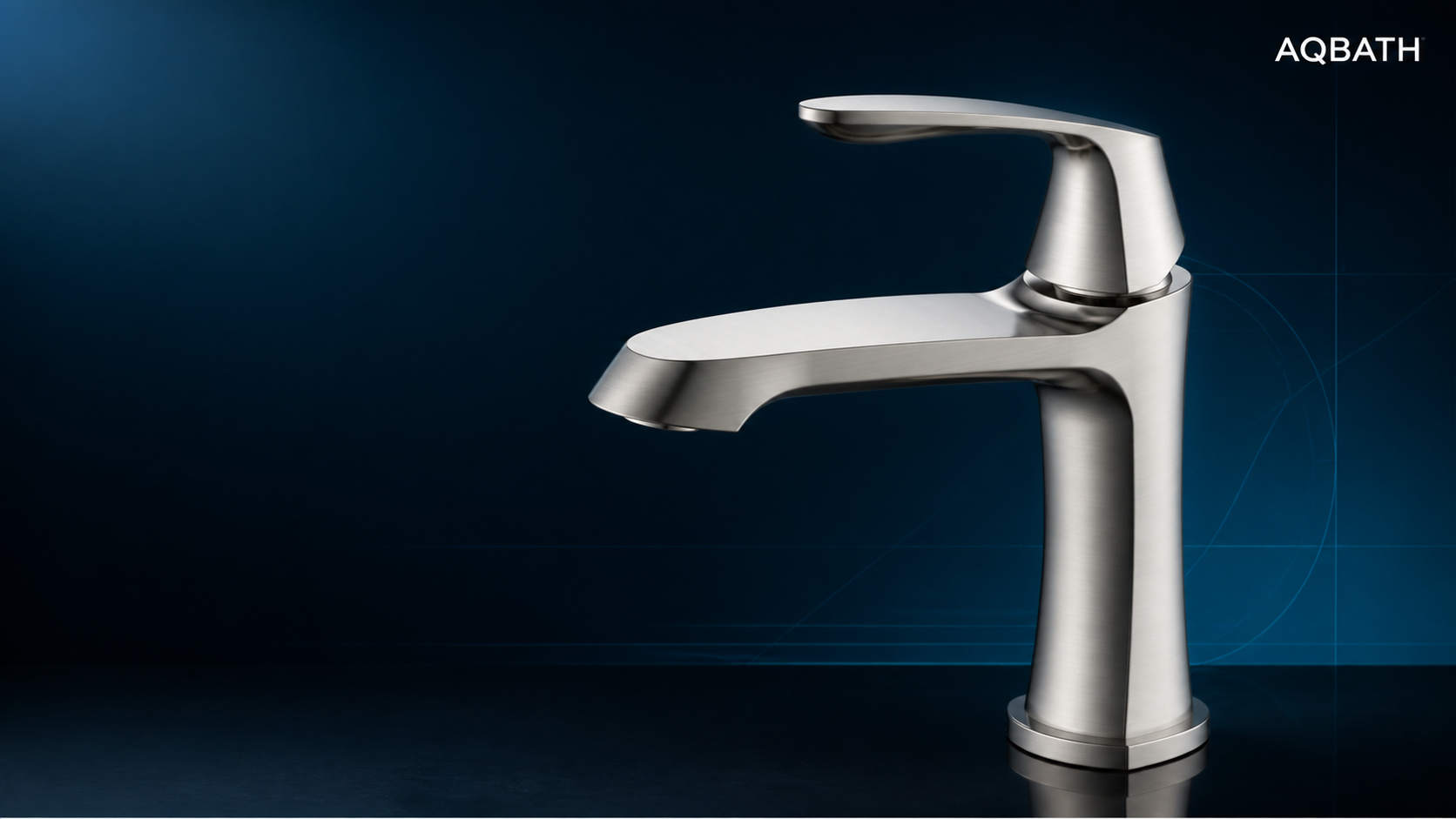



What are buyers really trying to say when searching for bathroom faucet manufacturers?
In reality, the search for bathroom faucet manufacturers rarely extends to the bathroom sector. Purchasing teams typically compare a wider range of bathroom equipment suppliers, examining which offer a unified product line covering both bathroom and kitchen products, and which can support private label or project orders. The final decision depends not only on whether the product has a shiny surface or a tall spout, but more importantly on whether the supplier can provide consistent and reliable quality, sound engineering design, and products that perfectly adapt to the installation environment without causing unnecessary rework.
This is crucial because faucets are at the intersection of plumbing systems, user experience, and cost control. If the design is clumsy, the valve core feels fragile, or the surface coating wears off too quickly, users will immediately notice these problems. Consumers need a manufacturer who understands both the product's appearance and its internal details.
Why does the example of a kitchen faucet help explain the issue of choice?
The product data here describes a single-hole kitchen faucet with a high gooseneck spout, a single-sided handle, and a brushed metal or faux chrome finish. This is a useful example, as many purchasing decisions begin with this type of modern, high-arch faucet. While its appearance is simple, it is actually composed of a compact set of cast or machined body parts, shaped metal, finishes, seals, and control mechanisms.
For buyers, the aesthetic features speak for themselves: single-handle operation, countertop mounting, aerating water flow, and ample space for pots, pans, and sink utensils. These are practical selling points, not exaggerated marketing gimmicks. The high-curve faucet reduces awkward wrist angles, making everyday kitchen work easier. The same design philosophy applies to bathroom design, where user comfort and finish consistency are equally important.
Key considerations when evaluating faucet suppliers
A good faucet manufacturer should not merely assemble aesthetically pleasing hardware. Suppliers should understand the product's basic structure, the consistency of surface finishes, and how the faucet will be used after leaving the factory. If it's contract manufacturing, the manufacturer also needs to support changes to branding, packaging, and specifications while ensuring quality.
When comparing Chinese faucet manufacturers and regional suppliers, buyers need to consider more than just geographical location. The key lies in the factory's ability to communicate clearly, control material selection, and ensure consistency in appearance and dimensions across batches. Generally, suppliers who can clearly explain what is standard, what can be customized, and what remains uncertain will provide a smooth purchasing experience.
Construction details are more important than brochure photos
Main material and surface treatment
Product data indicates that the faucet body is made of brass or a metal alloy with an electroplated or brushed finish, but the specific base material is not yet determined. This is something to pay special attention to. Unless explicitly stated in the specifications or inspection documents, buyers should not assume that a brass faucet manufacturer is actually supplying a brass product. The same warning applies to stainless steel faucets. Surface finishes in photos may look similar, but the base material will affect the faucet's workability, durability, and price structure.
Surface finishes also deserve more attention. While brushed or polished chrome finishes can create a modern look for a kitchen or bathroom, buyers should inquire about how the finish was applied and what kind of wear and tear is expected over time. The subtle differences in brushing, plating, and edge finishing become apparent once the product is installed under actual lighting conditions.
Spout shape and daily use
The towering, curved gooseneck faucet in the example is not merely decorative. It provides ample space for rinsing ingredients, holding water, and washing large cookware. In a space-constrained apartment kitchen, this size can determine whether a faucet is practical or cumbersome. The same principle applies to bathrooms, where sink depth, splash protection, and coverage all influence faucet usability.
How should OEM buyers view specification control?
If you're working with a faucet OEM manufacturer, the specifications sheet is just the beginning. A good supplier can provide detailed design specifications, but buyers still need to verify the installation method, handle operation, valve core performance, aerator performance, and consistency of surface finishes. Product data typically doesn't include precise dimensions, compliance claims, and internal component details, which is normal for products intended for reference only. This means buyers must complete this information themselves before finalizing the product confirmation.
Many projects go wrong here. The samples look good, the photos are perfect, but the first batch of products produced has subtle differences. For example, the feel of the handle has changed, the surface color has changed, or the faucet doesn't fit the countertop perfectly. These problems may not seem serious individually, but together they lead to returns and delays.
Common mistakes when purchasing faucets
A common mistake is choosing a faucet based solely on its appearance. Even a stylish, modern faucet can look unsuitable if the shape of the sink, the angle of the handle, or the length of the spout doesn't match the installation location. Another mistake is assuming that a supplier of kitchen faucets is necessarily the best manufacturer of bathroom faucets. While product lines may overlap, the selection criteria are not the same.
Another practical piece of advice: Don't treat "metal finish" as a substitute for a complete material declaration. Buyers should ask which information is confirmed, which is inferred, and which is observed directly from samples or pictures. Even if the supplier cannot clearly distinguish between these three, this information is still useful in itself.
What questions should be asked before selecting suppliers?
Inquire whether the factory supports OEM manufacturing, which parts are cast and which are molded, how surface finish is controlled, and whether the design can be applied to bathroom and kitchen product lines. Ask the supplier how they handle packaging, labeling, and ensuring product consistency for repeat orders. For residential, hotel, or apartment renovation projects, these details are just as important as the faucet itself.
In addition, you should inquire about a detailed description of the manufacturing process. For this type of product, the possible processes include casting or molding, machining, surface treatment, and final assembly. While these may seem insignificant, they are crucial to the success or failure of the product's quality.
Frequently Asked Questions: Quick Answers Buyers Typically Need
Is this type of faucet only suitable for the kitchen?
Not necessarily. The example given here is a kitchen faucet, but the same purchasing logic applies to bathroom renovations, as long as the design, size, and installation method suit the actual use.
Can you identify what material this is from the picture?
No. The data shows it is brass or a metal alloy with a brushed or electroplated surface, but the exact base material cannot be determined by appearance alone.
Why is a high-arc water outlet important?
It increases the space for larger items, making daily sink operations easier and more convenient. It's a simple yet practical feature.
The next practical steps for the procurement team
If you are screening bathroom faucet manufacturers or comparing kitchen faucet manufacturers for an OEM project , first look at samples, then quickly review the relevant documentation. Before you're swayed by photos, be sure to confirm details about the materials, finishes, installation methods, and internal components. While polished surfaces are pleasing to the eye, ensuring the product maintains the same performance after mass production is more challenging.
For teams building their own brand product lines or complementary sink accessory lines, the best suppliers are usually those who can answer tough questions directly rather than avoid them. This often saves time later on.