
Commercial Bathroom Faucet System: Why Individual Product Selection Often Fails in Large Facilities
A commercial bathroom faucet system is more than a faucet installed beside a sink.
In high-traffic commercial environments, the faucet, mounting structure, water control components, installation conditions, and maintenance accessibility all operate as part of a connected system. When these elements are selected independently, performance inconsistency becomes almost unavoidable.
Many commercial facilities discover this problem only after operation begins. One faucet loosens earlier than others. Water flow varies between washrooms. Replacement parts differ across floors. Maintenance teams spend more time troubleshooting than expected.
The issue is rarely caused by a single defective faucet. It is usually caused by the absence of a true system-based specification strategy.
The Core Pain Point: Commercial Bathrooms Experience Continuous Operational Stress
Commercial bathrooms are exposed to some of the highest usage frequencies in any building environment.
Typical usage levels include:
- Office buildings: 50–80 cycles/day
- Shopping malls: 80–120 cycles/day
- Airports and transportation hubs: 120+ cycles/day
- Hotel public areas: 60–100 cycles/day
Under these conditions, the most common failures include:
- Faucet base movement
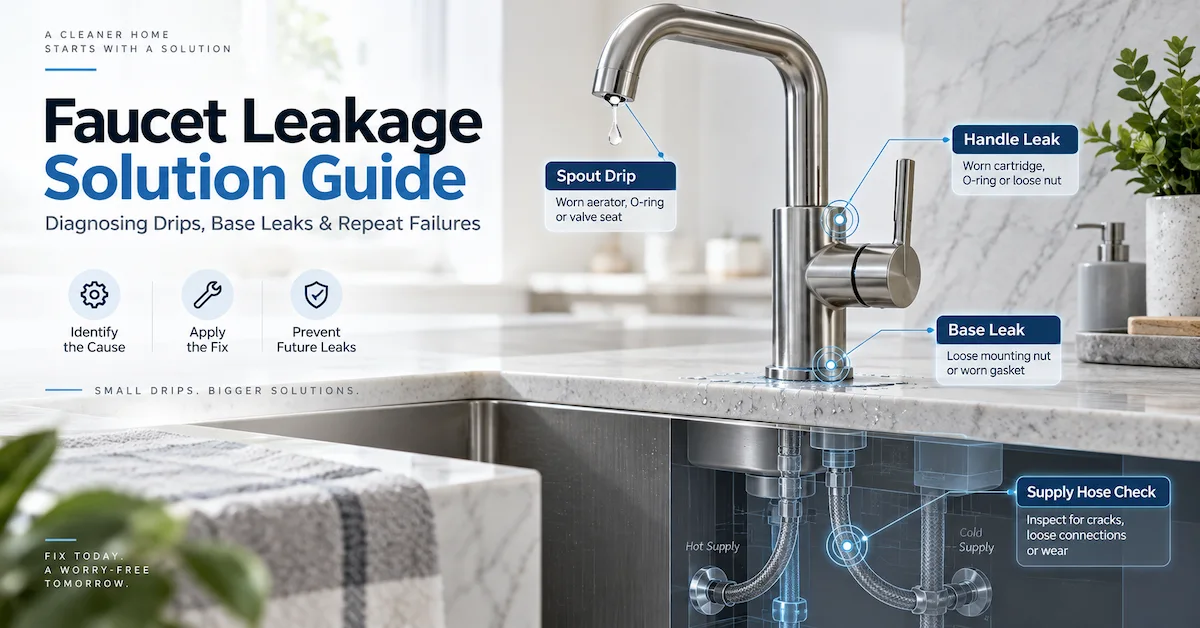
- Seal fatigue and leakage
- Inconsistent water pressure control
- Cartridge wear
- Uneven finish aging
When products are selected individually instead of as a coordinated commercial bathroom faucet system, these issues multiply over time.
Why Commercial Bathroom Faucet Systems Require Integrated Engineering
A proper commercial bathroom faucet system must be designed around stability, compatibility, and maintenance efficiency.
Structural integration
A reinforced mounting system combined with stable faucet construction reduces movement and lowers loosening incidents by approximately 25–35% in high-use facilities.
Water control consistency
Matching cartridge specifications across the system improves water flow consistency and reduces operational variance between different bathrooms.
Sealing system coordination
Commercial washrooms experience frequent temperature and pressure fluctuations. Better sealing design can reduce leak-related maintenance by 20–30%.
Material consistency
A brass bathroom faucet system improves installation precision, structural rigidity, and long-term reliability compared with mixed-material systems.
This is why system compatibility matters as much as individual product quality.
Performance Comparison: Independent Faucet Selection vs Integrated Faucet System
| Performance Factor | Independent Product Selection | Commercial Bathroom Faucet System | Practical Improvement |
|---|---|---|---|
| Installation consistency | Variable | Controlled | 15–20% fewer installation issues |
| Structural stability | Medium | Reinforced system | ~30% fewer loosening incidents |
| Leak resistance | Standard | Coordinated sealing | 20–30% fewer leakage cases |
| Maintenance efficiency | Fragmented | Simplified | 25–35% lower maintenance workload |
| Replacement compatibility | Inconsistent | Standardized | Faster servicing and lower downtime |
These figures reflect practical facility-management expectations, not showroom marketing claims.
Product-Level Details That Influence System Performance
A successful commercial bathroom faucet system depends on the interaction between components.
Reinforced fixed installation
A high traffic faucet system benefits from fixed mounting structures that minimize stress transfer into cartridges and seals.
High-cycle cartridge systems
Commercial cartridges must withstand tens of thousands of operational cycles without significant degradation.
Consistent brass body machining
A commercial bathroom faucet built with precision-machined brass components improves thread accuracy and installation repeatability.
Finish durability
Public facilities require surfaces capable of tolerating continuous cleaning and moisture exposure without rapid degradation.
These details directly influence long-term operating cost.
Typical Commercial Bathroom Faucet System Applications
Office buildings
Consistency and reduced maintenance are priorities. A coordinated faucet system helps standardize replacement and servicing across multiple floors.
Shopping malls and retail centers
Heavy public usage creates continuous operational stress. Stable faucet systems reduce downtime and improve maintenance efficiency.
Airports and transportation facilities
Extreme usage intensity requires maximum structural reliability and predictable servicing.
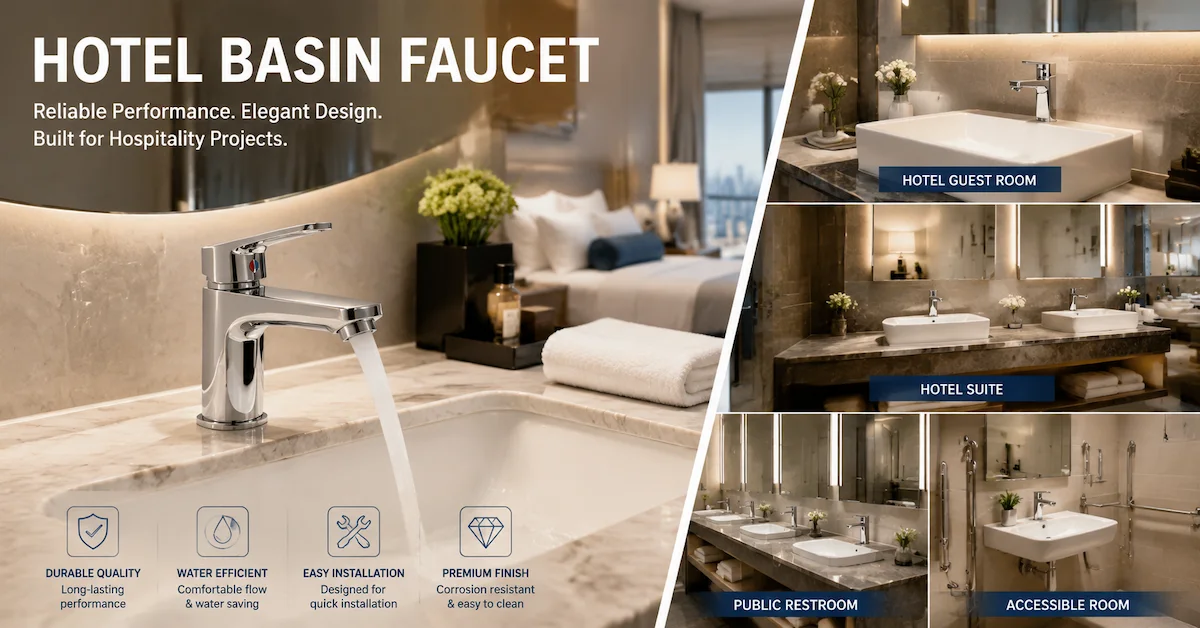
Hotel public washrooms
Unlike guest bathrooms, public hotel facilities experience concentrated usage peaks. A properly specified public washroom faucet system improves durability and guest experience simultaneously.
Hospitals and educational facilities
Hygiene, reliability, and maintenance accessibility are all critical factors in long-term system performance.
In these environments, a properly specified commercial bathroom faucet system can reduce maintenance interventions by approximately 25–35%.
Product Advantages That Matter in Commercial Systems
Better structural stability
Reduces loosening and movement under repeated use.
Improved maintenance efficiency
Standardized systems simplify replacement and servicing.
Reduced leakage risk
Coordinated sealing design improves long-term reliability.
Consistent user experience
Stable operation across all washrooms improves usability and facility perception.
Stronger batch consistency
Large commercial projects require predictable quality across all installed units.
How to Choose the Right Commercial Bathroom Faucet System
Evaluate usage intensity first
Different facilities require different structural specifications.
Standardize installation conditions
System-level consistency improves both installation and maintenance efficiency.
Prioritize compatibility
Faucets, cartridges, and mounting structures should work together as one coordinated solution.
Consider lifecycle cost instead of purchase price alone
Lower maintenance frequency often offsets higher initial specification cost.
Common Questions About Commercial Bathroom Faucet Systems
Q1. What makes a faucet system different from individual faucet selection?
A: A system approach standardizes installation, structural design, maintenance compatibility, and long-term operational performance.
Q2. Why are brass systems preferred in commercial facilities?
A: A brass bathroom faucet system typically offers stronger structural stability and better long-term durability.
Q3. How much maintenance reduction is realistic?
A: Facilities commonly achieve 25–35% fewer maintenance interventions with properly specified systems.
Commercial Bathroom Faucet Systems That Support Long-Term Facility Operations
A commercial bathroom faucet system is not just about selecting faucets—it is about building a stable, maintainable, and efficient operational environment for long-term commercial use.
At AQBATH, we develop integrated faucet solutions for commercial buildings, hotels, and public facilities, focusing on structural stability, installation consistency, sealing performance, and long-term maintenance efficiency.
👉 Homepage: https://www.aqbath.com/
If you are planning a commercial washroom project or evaluating faucet systems for high-traffic facilities, early coordination of installation and usage requirements can significantly improve long-term performance.
👉 Contact Us: https://www.aqbath.com/contact-us