
What Should a Basin Faucet Factory Prove Before You Place a Bulk Order?
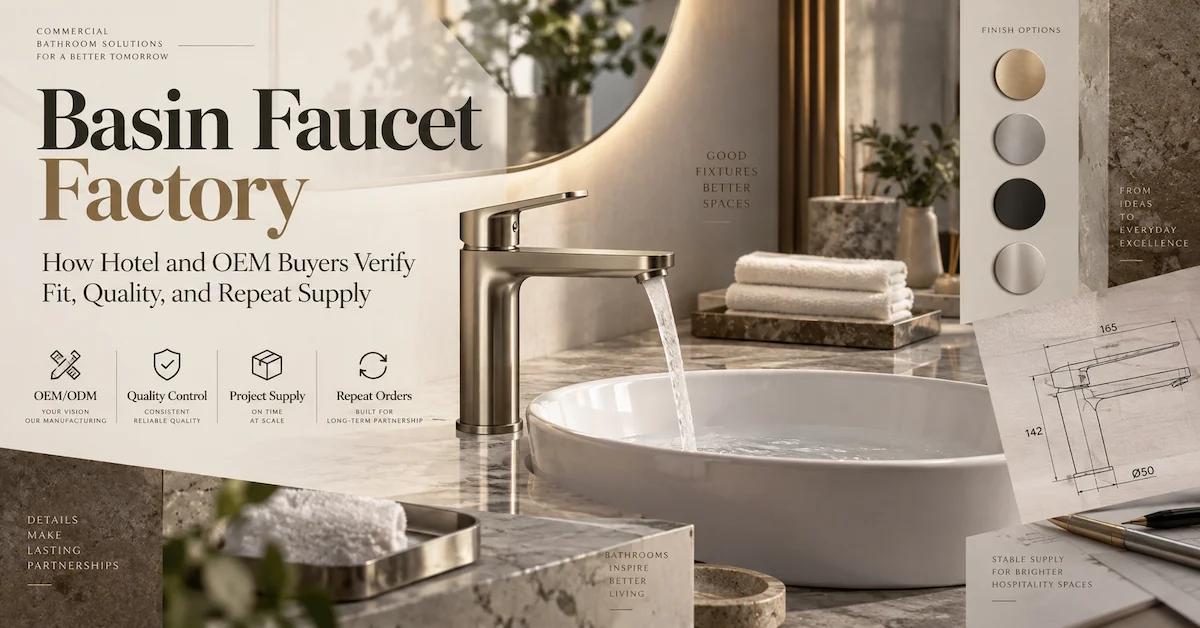
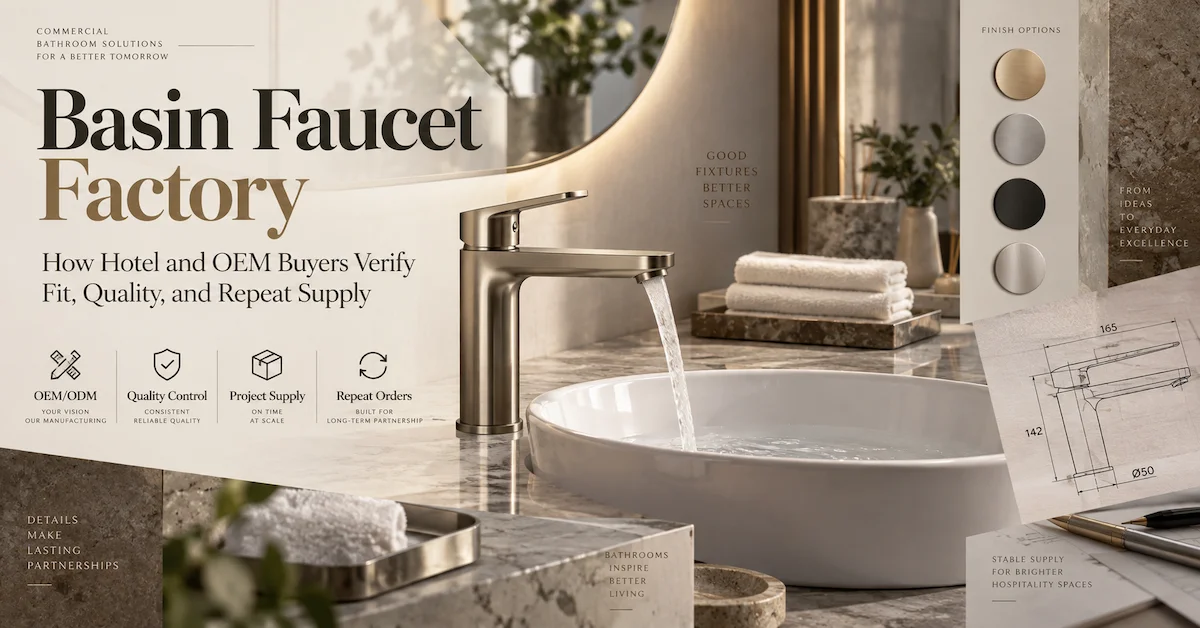
A professional basin faucet factory should prove that it can convert a selected faucet into a controlled product specification that can be reproduced across samples, mass production, and repeat orders. For hotel projects, apartment developments, distributors, wholesalers, and private-label bathroom brands, this means confirming the exact model, basin compatibility, faucet geometry, mounting method, materials, cartridge and aerator configuration, finish, supply hoses, installation hardware, quality checks, packaging, and applicable documentation before bulk production begins. AG Valve's current basin faucet range includes standard-height, tall, two-handle, single-handle, and quick-installation products from several product series, giving buyers different starting points for project and channel sourcing.
The most important principle is not to approve a faucet simply because it looks correct in a catalog. The factory should connect the quoted model to a current drawing, an agreed configuration, an approved sample, and clear inspection criteria. A strong sourcing decision therefore asks two questions at the same time: Does this faucet fit the actual basin and installation environment, and can the factory reproduce the same approved configuration on the next order?
Which Buyers Need a Basin Faucet Factory Rather Than a Simple Product Seller?
A basin faucet factory is particularly relevant when the purchase involves repeated specifications rather than one-time retail selection. Hotel and resort buyers need standardized products that can be installed room after room and supported after handover. Apartment developers and contractors need predictable mounting dimensions and repeatable site installation. Importers and distributors need a stable model that can be reordered with the same finish, components, packaging, and documentation. Private-label brands additionally need logo, packaging, finish, handle, product configuration, and revision control. Bathroom cabinet and basin manufacturers may focus even more heavily on geometric compatibility because faucet height and reach directly affect how their own basin products perform.
Factory-level sourcing is less useful when the application has not been defined. If the buyer cannot identify the basin type, countertop arrangement, installation hole, available space, target market, or required faucet configuration, selecting a model by appearance can create avoidable redesign later. The correct first step is to define the bathroom and basin conditions, then shortlist products from the AQBATH product range.
Start With the Basin, Not With the Faucet Style
Many sourcing errors begin with a photograph of a faucet instead of a drawing of the basin. A standard undermount basin, an integrated vanity basin, and a countertop vessel basin may all require different faucet geometry. Buyers should therefore confirm basin height, bowl width and depth, faucet mounting position, distance from the faucet centre to the bowl, countertop thickness, available cabinet space, and intended water landing point before final model approval.
A tall faucet is not automatically a premium upgrade. It is useful when its height and reach match a countertop vessel basin, but the same geometry can create excessive splash or awkward hand clearance with a shallow basin. AG Valve currently positions the A0053-02 tall single-handle basin faucet for countertop-basin applications, while the A0053-01 basin faucet represents a more conventional single-handle basin configuration. Those product positions are useful shortlist information, but the buyer should still compare the selected faucet with the actual basin before mass approval.
Build a Controlled Basin Faucet Specification Before Requesting Final Pricing
A useful RFQ should replace broad descriptions such as “high-quality hotel faucet” with specific items that purchasing, engineering, the basin faucet factory, and the installer can all understand. The specification does not need to contain every production detail at the initial inquiry stage, but it should identify the issues that can change compatibility, cost, compliance, or after-sales risk.
| Specification Area | What Buyers Should Confirm | Why It Matters |
|---|---|---|
| Basin type | Vessel, undermount, integrated, standard vanity or other | Determines suitable faucet geometry |
| Faucet position | Deck position relative to basin | Influences water landing point and user clearance |
| Faucet height | Required overall and outlet height | Helps match standard or tall basin designs |
| Spout reach | Horizontal reach toward the basin | Affects splash and washing space |
| Installation hole | Required hole diameter and mounting arrangement | Prevents site incompatibility |
| Countertop thickness | Actual project range | Determines whether mounting hardware fits |
| Control type | Single-handle, dual-handle or project requirement | Defines product configuration |
| Connections | Required supply connection and hose arrangement | Must match destination installation |
| Flow requirement | Project or destination-market requirement | Affects aerator and product specification |
| Finish | Approved finish or reference sample | Controls project appearance |
| Packaging | Standard, project or private-label packaging | Affects installation and retail supply |
| Documentation | Drawing, instructions, test evidence and applicable certificates | Supports technical approval |
The final quotation should refer back to this approved specification. If a handle, cartridge, hose, aerator, mounting part, or finish changes later, the change should be visible rather than silently absorbed into a new production batch.
Compare Standard, Tall, and Top-Fixed Basin Faucet Configurations
AQBATH's basin category currently shows several models and series, including A0053, A0016, AQH, and the A0061-1 quick-installation product. Its separate Top Fixed Basin Faucets category currently lists A0061-1, which makes installation method another useful selection dimension rather than treating every basin faucet as the same type.
| Product Direction | Public AQBATH Example | Typical Selection Reason | Confirm Before Ordering |
|---|---|---|---|
| Standard-height single-handle basin faucet | A0053-01 | Conventional vanity and basin projects | Height, reach, hole, deck thickness, cartridge, aerator and hoses |
| Tall basin faucet | A0053-02 | Countertop vessel basins requiring greater clearance | Faucet/basin geometry, splash behaviour, mounting and finish |
| Quick-installation/top-fixed basin faucet | A0061-1 | Projects where access below the vanity makes fastening difficult | Exact fixing method, mounting range, tools, hoses and installation procedure |
| Wider basin faucet range | Basin Faucets | Distributors or projects comparing several design families | Model identity, configuration, documentation and destination requirements |
This is a sourcing comparison, not a claim that one configuration is universally better. The correct product is the one whose controlled dimensions and installation method fit the actual basin and project conditions.
Specify Materials by Component Instead of Asking Only for a “Brass Faucet”
Professional sourcing should distinguish the faucet body from the other components in the assembly. A buyer evaluating a brass basin faucet should still ask about the body, handle, spout, water-contact components, cartridge, aerator, mounting hardware, hoses, seals, and decorative parts separately. This matters because the final product is a system of components rather than a single block of material.
AQBATH states on its About Us page that its production capabilities include brass casting, zinc-alloy die casting, forging, welding, pipe bending, cold stamping, precision machining, polishing, and electroplating. Its A0053-01 and A0053-02 product pages position those series as brass basin faucets and describe manufacturing processes including casting and machining. These are useful factory and product-level starting points, but the buyer should still request the approved material and component specification for the exact SKU instead of assuming one description applies to the entire catalog.
How Should Buyers Evaluate Basin Faucet Factory Manufacturing Capability?
A factory audit becomes more useful when every manufacturing capability is connected to a product risk. Casting quality matters because the faucet body contains structural features and water passages. Machining affects threaded interfaces, sealing locations, cartridge installation and dimensional consistency. Polishing affects the substrate before finishing. Plating or coating influences appearance and surface durability. Assembly determines whether the specified cartridge, hoses, aerator, seals and mounting hardware actually reach the final product. Functional inspection is the last opportunity to detect leakage or operation problems before packaging.
AG Valve states that its quality-management capabilities include material spectral analysis, coating inspection, 3D image measurement, hardness testing, lifespan testing, product leakage testing, and electroplating salt-spray testing. Buyers should not stop at the equipment list. Ask which checks apply to the selected model, what test conditions are used, what acceptance limits apply, and whether the inspection is conducted on every unit or by sampling where appropriate. Company-level capability is evidence that testing resources exist; model-level records show how those resources are applied to your order.
Check Cartridge, Aerator, and Hoses as Separate Sourcing Items
Three relatively small components can create a large percentage of field complaints: the cartridge, aerator, and supply hoses. The cartridge influences water control and sealing; the aerator influences outlet behaviour and flow; hoses connect the product to the site water supply. A serious basin faucet factory should therefore be able to define the approved component specification instead of treating those items as invisible accessories.
When reviewing a sample, operate the handle repeatedly, inspect shutoff behaviour, check temperature and flow adjustment, observe the water stream in the real basin, inspect hose routing inside the vanity, and confirm whether installation hardware remains accessible. If the project requires a specific flow rate, water-efficiency requirement, cartridge brand, hose length, or connection type, put that requirement into the order specification. Do not assume a similar-looking model uses the same internal components.
Treat Finish Approval as a Production Standard, Not a Color Name
“Chrome,” “matte black,” or “brushed finish” is not enough information for a large project or private-label program. Hotel buyers may install basin faucets beside towel hardware, shower products, mirrors, drains, and other visible metal components, so colour and gloss inconsistency can be noticeable even when each individual product is functional. Distributors face a similar problem when repeat orders are displayed beside old stock.
Approve a physical reference sample where appearance is commercially important. Define which surfaces are critical and how obvious cosmetic defects will be judged. If several bathroom product categories need to coordinate, review them together rather than approving finishes in isolation. AQBATH's bathroom faucet quality audit also treats material, cartridge, finish, dimensional control, testing, packaging, and traceability as connected approval issues rather than independent marketing claims.
Verify Quality and Certification at Model Level
A website certificate list should begin a compliance discussion, not end it. AQBATH's company page currently displays certificate categories including ISO9001, ISO14001, CUPC, NSF, CE, WaterMark, and SNI. For an actual purchase, request the current document relevant to the destination market and compare the certificate holder, covered product or model family, standard, scope, and current status with the exact quoted product.
This is especially important for OEM programs because changes to water-contact components, aerators, cartridges, structures, or other controlled parts may affect what documentation applies. Avoid using a factory-level certificate list as blanket proof for every SKU. A more defensible purchasing package connects one model number to one configuration, the applicable technical documents, inspection requirements, and an approved sample.
Top-Fixed Basin Faucets Should Be Evaluated by the Actual Installation Workflow
Installation becomes increasingly important when the same faucet is fitted in dozens or hundreds of bathrooms. Conventional deck-mounted faucets often require significant fastening access underneath the basin or countertop. AQBATH's top-fixed category moves the main fastening concept toward above-the-deck access, and A0061-1 is currently listed as its quick-installation basin model.
However, a top-fixed system should not be reduced to an unqualified statement such as “no under-basin work.” Water connections and other installation tasks may still require access below the countertop depending on the product and site. Hotel contractors and apartment developers should therefore conduct a representative vanity mock-up. Record the fastening steps, tools, connection work, installer access, total installation time, and any rework. The resulting project data is more useful than a generic installation-speed percentage because it reflects the actual basin, cabinet and plumbing conditions.
Capacity and Lead Time Should Be Confirmed After the Product Is Defined
Factory size does not automatically tell a buyer how quickly a specific order can be delivered. A basin faucet program may involve multiple finishes, special packaging, customized handles, new molds, destination-market testing, or several models within one order. Each requirement can influence procurement and production planning.
Ask the factory to separate sample timing, technical approval, packaging approval, production lead time, final inspection, dispatch, and logistics. For hotel and apartment projects, provide the installation schedule so phased deliveries can be discussed where appropriate. For distributors, provide expected repeat-order volumes so the supplier can discuss replenishment planning. Do not assume one MOQ or lead time applies to all basin faucet models and finishes unless the supplier has confirmed it for the actual quotation.
Basin Faucet Cost Should Be Compared as a Controlled Scope
The cheapest unit price is not necessarily the lowest purchasing cost. Two quotations may appear to describe the same basin faucet while using different cartridge specifications, hoses, aerators, materials, finishes, packaging, inspection plans, or certification scope. One supplier may include mounting hardware and retail packaging while another prices them separately. Without a controlled RFQ, the comparison is incomplete.
A better cost review includes product price, customization, tooling if required, sample costs, testing or documentation where applicable, packaging, spare parts, inspection, logistics, and potential after-sales exposure. Installation also has a cost: a faucet that is difficult to fasten inside a narrow vanity can increase labour or rework even if its unit price is lower. For this reason, commercial evaluation should happen only after the product configuration is sufficiently clear.
OEM and Private-Label Basin Faucet Projects Need Revision Control
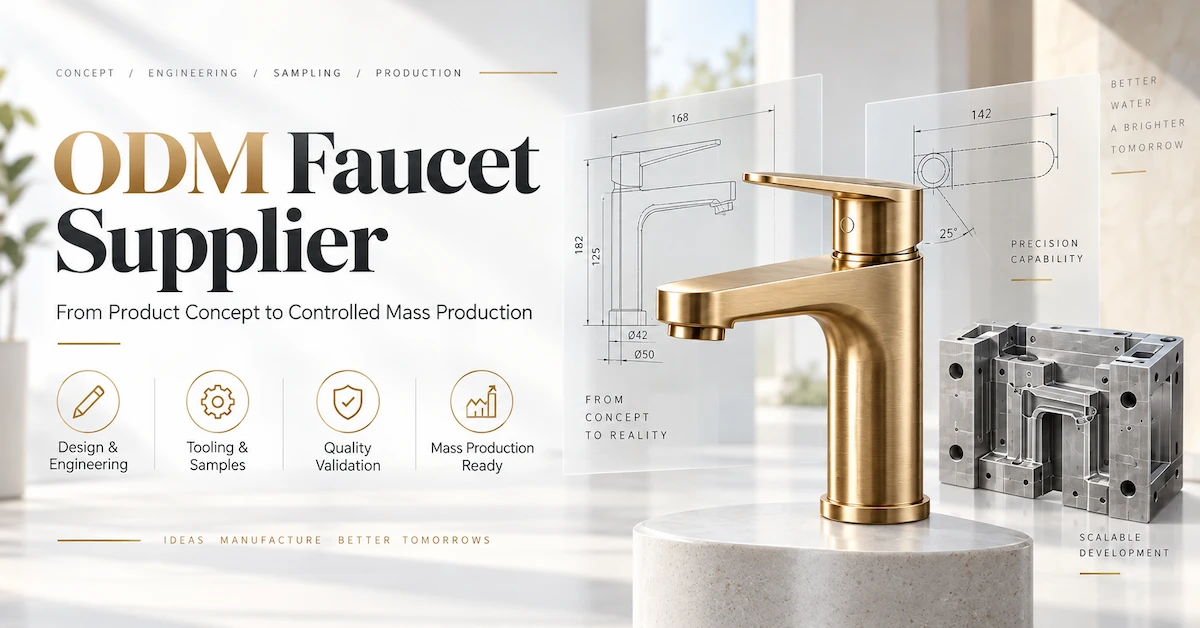
An OEM project should distinguish branding changes from engineering changes. Logo application, carton artwork, labels, and instruction manuals may leave the hydraulic configuration unchanged; modifications to faucet height, spout geometry, handle, cartridge, aerator, hoses, mounting structure, or other functional parts can require additional technical review.
AG Valve positions its basin faucet products for OEM/ODM and bulk supply, including products such as A0053-01 and A0053-02. A practical approval sequence is to select the platform, confirm the drawing, define custom requirements, approve the engineering sample, approve the finish and branding, confirm packaging, establish inspection criteria, and then release mass production. The final approved package should identify the exact revision so a successful first shipment can become a repeatable product rather than a one-time sample.
What Should You Send a Basin Faucet Factory for an Accurate RFQ?
A useful inquiry should include the destination country, buyer type, project or retail application, estimated order quantity, annual forecast where known, basin drawing or dimensions, countertop information, faucet position, desired height and reach, installation hole, finish, connection requirements, flow requirement, required documentation, branding, packaging, spare-parts expectations, and project timeline. For replacement projects, photographs are useful, but they should be accompanied by dimensions wherever possible.
Buyers who already have a defined requirement can use the AG Valve Contact Us page to submit the project information instead of sending only a reference picture and asking for the lowest price. A structured RFQ helps the factory identify whether an existing model fits the requirement or whether an OEM/ODM modification should be evaluated.
Frequently Asked Questions
1. What is the difference between a basin faucet factory and a basin faucet supplier?
A factory is primarily evaluated for product development, manufacturing, process control, testing, and repeat production capability, while “supplier” can describe either a manufacturer or a trading company. Buyers should verify the actual production responsibilities rather than relying only on the company description.
2. Which basin faucet is suitable for a countertop vessel basin?
A taller faucet is often considered for vessel basins because the bowl sits above the countertop, but height alone is not sufficient. Check outlet height, spout reach, basin depth, faucet position, and water landing point. AQBATH currently positions A0053-02 as a tall basin faucet for countertop-basin applications.
3. Is a tall basin faucet better than a standard basin faucet?
No. The better option is the one that matches the basin geometry. A tall faucet used with an unsuitable shallow basin can increase splash, while a standard faucet may not provide enough clearance for a vessel basin.
4. What should I verify on a basin faucet drawing?
Check overall height, outlet height, spout reach, installation hole, mounting arrangement, countertop thickness range where specified, supply connections, and any dimensions that affect the basin or cabinet. Use the latest controlled drawing for final approval.
5. What should hotel buyers test before placing a bulk order?
Install the approved sample in a representative vanity and basin. Check mounting access, faucet/basin geometry, splash, handle clearance, hose routing, water connections, finish appearance, operation, leakage, and maintenance access before releasing the full room quantity.
6. Can a basin faucet factory provide OEM or private-label products?
OEM scope can include branding, finishes, packaging and other configuration changes, while deeper ODM work may involve changes to structure or components. AQBATH publicly positions several basin faucet models for OEM/ODM supply, but the exact customization range should be confirmed for the selected model.
7. What quality tests should I ask for?
The required test plan depends on the product and destination market. Typical purchasing discussions may include material verification, dimensional inspection, leakage testing, operation or lifespan testing, coating inspection and corrosion-related testing. Ask for test conditions and acceptance criteria rather than only test names.
8. Does every AQBATH basin faucet have the same certifications?
That should not be assumed. Company pages can display certification capabilities, while the scope of individual documents may be limited to particular products or configurations. Request current documentation applicable to the exact SKU and target market.
9. How can distributors reduce repeat-order variation?
Link purchasing to an approved model, drawing revision, key component specification, finish reference, packaging standard, inspection criteria, and approved sample. Require review before meaningful substitutions or specification changes are introduced.
10. What information is most important when requesting a basin faucet quotation?
Provide the market, quantity, basin type, basin and countertop dimensions, mounting position, installation hole, desired faucet geometry, finish, connections, flow requirement, compliance requirements, packaging, branding, and delivery target. Better RFQ information normally produces a more comparable quotation.
Conclusion
Choosing a basin faucet factory is not simply a matter of finding an attractive faucet at a competitive price. Hotel buyers, apartment developers, contractors, distributors, wholesalers, and private-label brands should verify how the faucet fits the actual basin, how its materials and critical components are specified, how the factory controls casting, machining, finishing, assembly and testing, how installation will work on site, and how the approved product will be reproduced during future orders. AG Valve's basin faucet collection provides several standard, tall and quick-installation directions for project and OEM evaluation, while its manufacturing profile outlines product-development, production and quality-management capabilities. Before bulk approval, connect the selected model to a controlled drawing, specification, sample, inspection plan and commercial scope. To start a project-specific assessment, send your basin type, drawings, installation dimensions, target market, finish, order quantity, OEM requirements and delivery schedule through AG Valve Contact Us.