
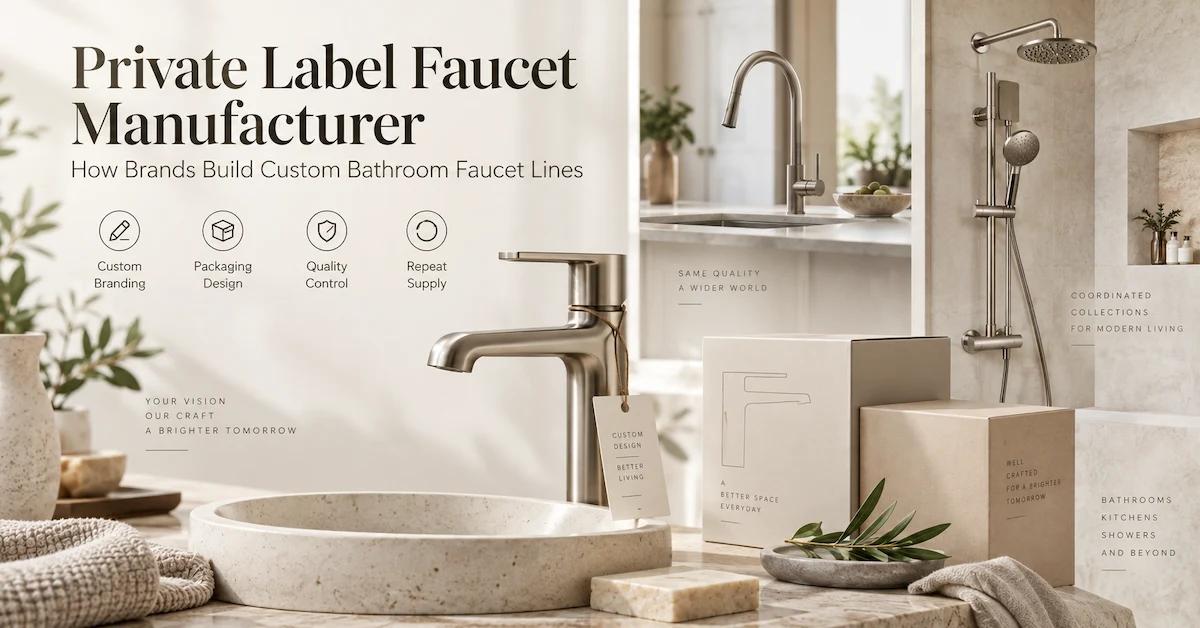
What Does a Private Label Faucet Manufacturer Provide for Brands?
A private label faucet manufacturer helps brands transform faucet concepts into market-ready products under their own brand identity. Unlike simple product purchasing, private labeling requires coordination between product selection, customization, manufacturing control, packaging, documentation, and repeat-order management.
For bathroom brands, distributors, importers, and project suppliers, the goal is not only to purchase faucets but to build a consistent product line that customers can recognize and reorder. A successful private-label program connects the approved product design with a stable manufacturing process, clear specifications, and controlled changes.
AG Valve provides a range of bathroom and kitchen faucet products, including basin faucets, kitchen faucets, shower faucets, bathtub faucets, commercial kitchen faucets, and top-fixed faucet solutions. Buyers can review the complete faucet product range to identify suitable product platforms before discussing private-label requirements.
A professional private-label project should answer several important questions:
- Which faucet category matches the target market?
- Which product features create differentiation?
- Which parts require customization?
- How should quality be controlled?
- How can future orders maintain the same approved standard?
The answers determine whether the project is simply branded purchasing or a long-term product development partnership.
Who Needs a Private Label Faucet Manufacturer?
Bathroom Brands Developing Their Own Collections
Bathroom brands often need products that match their market positioning while avoiding the investment required to build their own manufacturing facilities.
A private-label faucet manufacturer can support brands with:
- Product platform selection
- Custom finishes
- Logo application
- Packaging design
- Product documentation
- Configuration adjustments
For growing bathroom brands, private labeling provides a way to create differentiated collections while using established manufacturing capabilities.
Importers and Distributors Building Product Portfolios
Importers and distributors usually focus on stable supply, product consistency, and market differentiation.
Their main concerns often include:
- Reliable production
- Consistent appearance between orders
- Clear specifications
- Replacement parts
- Packaging suitable for their sales channels
A private-label program allows distributors to develop their own product identity instead of competing only through price.
Hotel and Project Suppliers
Hotel developers, contractors, and project suppliers often require bathroom products that can be standardized across multiple rooms or properties.
Important factors include:
- Installation consistency
- Product availability
- Maintenance requirements
- Project packaging
- Long-term replacement support
For these buyers, private labeling is often connected with project control and product consistency.
Choose the Right Faucet Platform Before Customization
One of the most important decisions in private-label sourcing is selecting the correct product platform before requesting customization.
Many buyers begin by asking for a completely new faucet design. However, an existing product platform may already satisfy the main requirements while reducing development complexity.
AG Valve organizes its faucet products according to different applications, including:
Before customization, buyers should evaluate:
Existing Product + Branding
Suitable for buyers who mainly need:
- Logo customization
- Packaging changes
- Product documentation
- Market-specific branding
Existing Product + Feature Customization
Suitable when buyers need:
- Different finishes
- Handle changes
- Accessory adjustments
- Product combinations
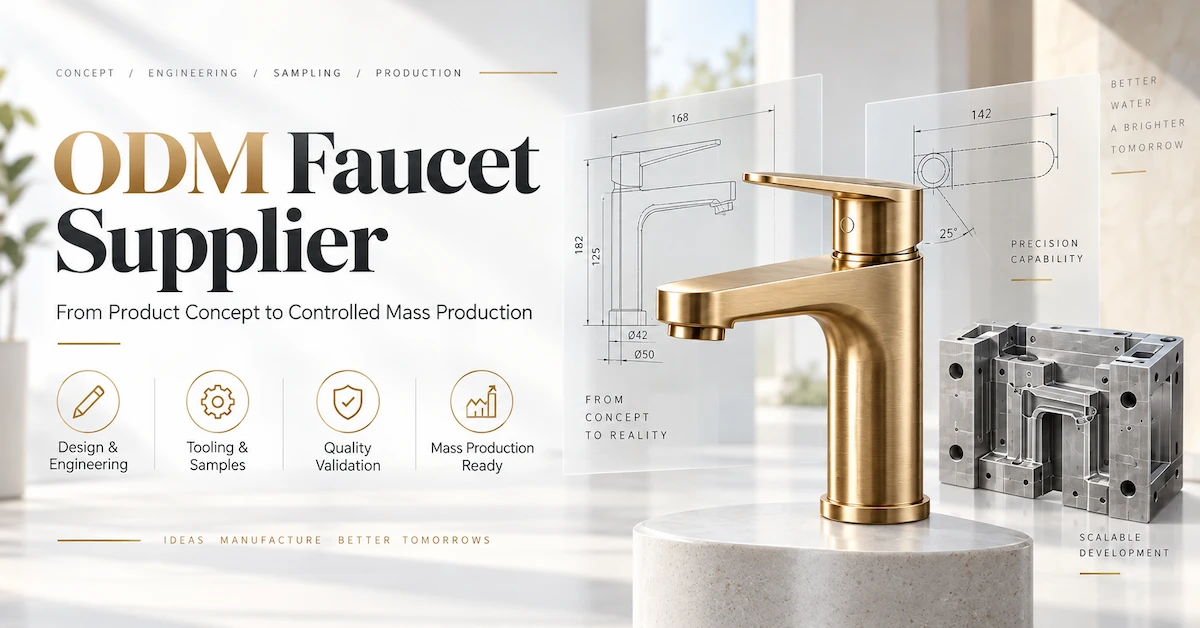
New Product Development
Suitable for brands requiring:
- Unique appearance
- New structure
- Exclusive product concepts
The deeper the customization, the more important engineering confirmation, sample approval, and change control become.
Define Private Label Faucet Requirements Before Quotation
A private-label faucet manufacturer needs clear product information before providing an accurate proposal. A detailed specification reduces communication problems between the buyer, engineering team, and factory.
| Requirement | Buyer Should Confirm | Importance |
|---|---|---|
| Product category | Basin, kitchen, shower, bathtub or commercial faucet | Determines manufacturing direction |
| Target market | Country or sales region | Supports product planning |
| Faucet style | Modern, classic, minimalist or commercial | Defines design direction |
| Material requirements | Body and key components | Controls product specification |
| Finish | Chrome, black, brushed or custom finish | Ensures appearance consistency |
| Logo requirements | Position and marking method | Defines branding process |
| Packaging | Retail or project packaging | Supports brand presentation |
| Documentation | Manuals, labels, product information | Supports customer experience |
| Quantity | Initial order and forecast | Helps production planning |
| Custom features | Handle, spout, accessories or components | Determines technical requirements |
A clear product brief allows the manufacturer to evaluate whether the project fits an existing product or requires additional development.
Private Label Faucet Customization Options
Brand Identity Customization
Brand-related customization usually includes:
- Logo marking
- Packaging design
- Product labels
- Instruction manuals
- Marketing materials
These elements help convert an existing faucet platform into a branded product.
Appearance Customization
Brands may customize visible design elements such as:
- Surface finishes
- Handle appearance
- Product combinations
- Decorative details
Appearance changes should always be evaluated together with production consistency.
Functional Customization
More advanced customization may involve:
- Faucet structure
- Internal components
- Accessories
- Installation methods
These changes require more technical evaluation because they may influence manufacturing processes, testing requirements, and future supply.
AG Valve provides manufacturing information through its About Us page, which buyers can use as a reference when evaluating OEM and private-label cooperation.
How a Private Label Faucet Manufacturer Controls Product Quality
Private-label quality control begins before production. The manufacturer and buyer need to agree on what defines an approved product.
Material and Component Control
A faucet is made of multiple components, not only the visible body.
Important components may include:
- Faucet body
- Cartridge
- Aerator
- Supply hoses
- Mounting hardware
- Seals
- Decorative components
Each critical component should be linked to the approved specification.
Manufacturing Process Control
Manufacturing consistency depends on controlling each production stage.
Typical processes include:
- Casting
- Machining
- Polishing
- Surface finishing
- Assembly
- Final inspection
AG Valve describes manufacturing capabilities including product development, casting, machining, polishing, electroplating, and inspection processes on its company information page.
For buyers, the key question is not only whether these capabilities exist, but how they apply to the specific private-label faucet being developed.
Sample Approval Creates the Production Standard
The sample approval stage is one of the most important steps in a private-label faucet project.
An approved sample should confirm:
- Product appearance
- Finish quality
- Component configuration
- Logo placement
- Packaging
- Installation information
The approved sample should connect with:
- Product drawing
- Model number
- Revision information
- Component specification
This prevents future production batches from drifting away from the original approved product.
A sample is not only a visual reference. It becomes the foundation for repeat production control.
Packaging and Documentation Strengthen Brand Value
Private-label products compete through both hardware and customer experience.
Packaging can influence:
- Retail presentation
- Distributor handling
- Installation efficiency
- Brand recognition
Important documentation may include:
- Installation instructions
- Product specifications
- Maintenance information
- Replacement information
For brands and distributors, complete documentation reduces customer questions and improves product confidence.
Private Label vs OEM vs Standard Purchasing
| Purchasing Model | Description | Suitable Buyer |
|---|---|---|
| Standard purchasing | Buy existing products without major changes | Distributors needing fast product selection |
| Private label | Existing products customized with buyer branding | Brands building their own collections |
| OEM development | Products produced according to buyer requirements | Companies seeking deeper differentiation |
The best model depends on:
- Market positioning
- Product goals
- Expected quantity
- Customization requirements
- Development resources
Private labeling is often a practical middle path between standard purchasing and complete product development.
Control Long-Term Supply After Product Launch
Launching a private-label faucet is only the beginning. Long-term success depends on maintaining consistency in future orders.
Important controls include:
- Approved product sample
- Drawing revision
- Component records
- Finish reference
- Packaging artwork
- Inspection requirements
When changes occur, buyers should understand:
- What changed?
- Why was it changed?
- Does approval need to be repeated?
A strong private-label faucet manufacturer should support controlled changes rather than allowing uncontrolled substitutions.
Private Label Faucet Cost Factors Buyers Should Understand
The product unit price is only one part of private-label investment.
Other cost factors may include:
| Cost Factor | Description |
|---|---|
| Product cost | Manufacturing cost of the faucet |
| Customization | Branding, finishes, components |
| Packaging | Custom boxes, labels and manuals |
| Samples | Development and approval samples |
| Tooling | Required for new structures |
| Inspection | Additional quality requirements |
| Logistics | Transportation and handling |
A lower unit price does not always create lower total cost. Poor specification control can lead to redesign, delays, customer complaints, or replacement expenses.
How to Prepare an RFQ for a Private Label Faucet Manufacturer
A professional RFQ should include:
- Company introduction
- Target market
- Product category
- Reference products
- Expected quantity
- Forecast demand
- Customization requirements
- Logo requirements
- Packaging needs
- Finish preferences
- Required documents
- Project schedule
Buyers can review AG Valve's product catalog and submit project details through the Contact Us page.
A detailed RFQ helps the manufacturer determine whether an existing product platform or customized development path is more suitable.
Frequently Asked Questions
What is a private label faucet manufacturer?
A private label faucet manufacturer produces faucets that are sold under another company's brand. Services may include branding, packaging, customization, and manufacturing support.
What is the difference between private label and OEM faucets?
Private labeling usually focuses on branded products based on existing platforms, while OEM can involve deeper customization according to buyer requirements.
Can I customize faucet finishes for my brand?
Finish customization may be available depending on the product platform and production requirements. Buyers should confirm available finishes and approve samples before mass production.
Can I add my own logo to faucets?
Logo customization is a common private-label requirement. The marking method, location, and production process should be confirmed before approval.
Do private label faucets require large quantities?
Quantity requirements depend on the product model, customization level, packaging, and manufacturing conditions. Buyers should discuss the specific project rather than assume one standard quantity.
How can I maintain quality in repeat orders?
Maintain an approved sample, product specification, drawing revision, component records, and change-control process.
Can private label faucets be used for hotel projects?
Yes. Hotel suppliers often use private-label programs to create consistent bathroom product collections across multiple rooms.
What information should I provide before contacting a manufacturer?
Provide product type, market, quantity, customization needs, branding requirements, packaging expectations, and technical preferences.
How long does private label faucet development take?
The timeline depends on whether the project uses an existing product or requires deeper customization, sampling, approval, and development work.
Why work directly with a manufacturer?
Direct factory cooperation can provide closer communication on product specifications, customization, production processes, and repeat-order management.
Conclusion
Choosing a private label faucet manufacturer means building a controlled bathroom product program rather than simply adding a logo to an existing product. Successful private-label projects require careful product selection, clear specifications, controlled customization, sample approval, quality management, packaging coordination, and long-term supply planning.
AG Valve provides multiple faucet categories and manufacturing capabilities that can support private-label discussions for brands, distributors, and project buyers. Explore the AG Valve faucet product range, review manufacturing information through About Us, and submit your requirements through Contact Us to evaluate the suitable private-label faucet solution for your market.