
What Should a Hospitality Bathroom Supplier Provide Beyond Individual Faucets?
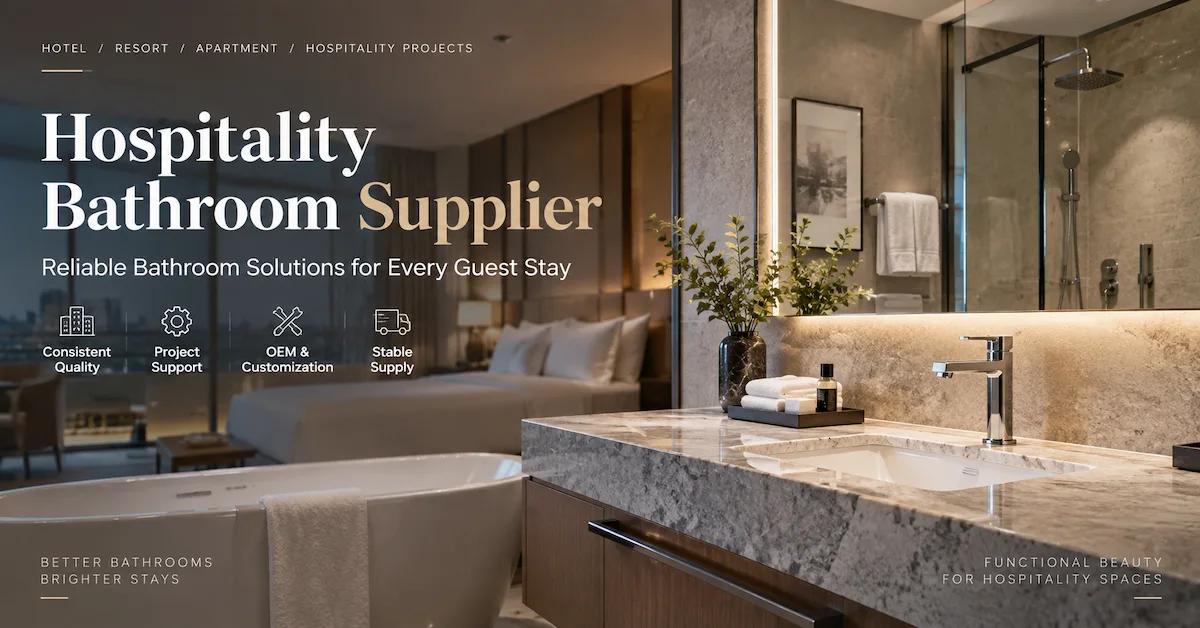
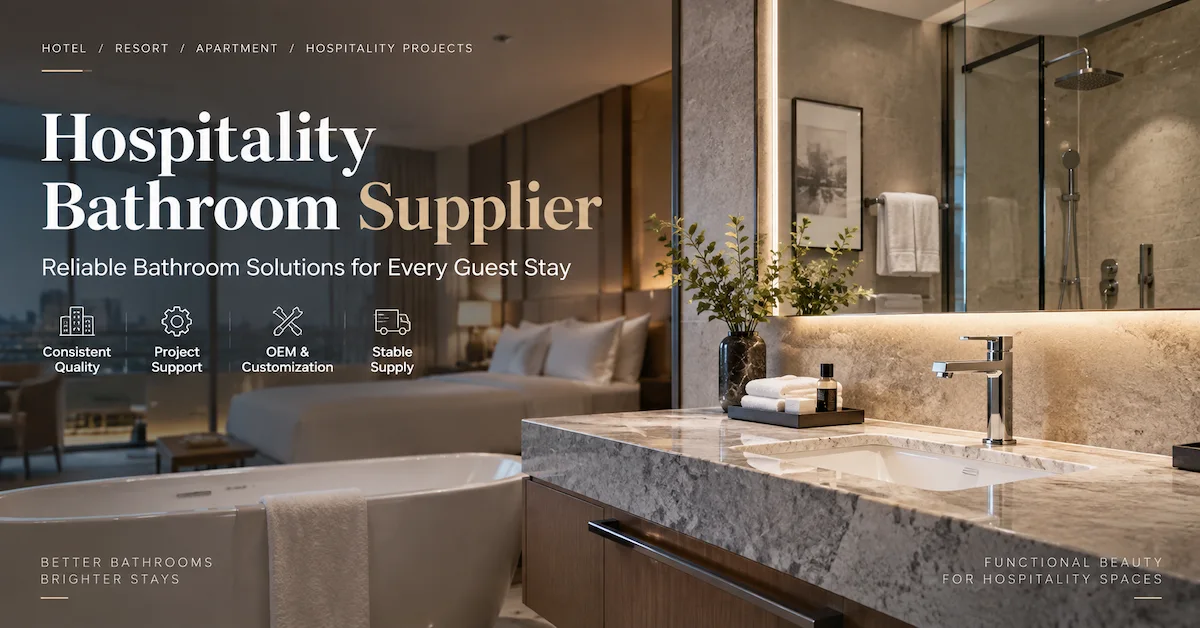
A professional hospitality bathroom supplier should help a hotel project turn design intent into repeatable product specifications that can be purchased, installed, inspected, maintained, and reordered across multiple rooms. The purchasing decision therefore goes beyond choosing an attractive faucet. Buyers need to confirm whether basin faucets, bathtub fittings, shower systems, finishes, mounting methods, connections, packaging, spare parts, and technical documents can be coordinated with the actual bathroom layout and project schedule.
For hotel developers and procurement teams, the key question is not simply, “Do you supply bathroom faucets?” It is, “Can the same approved product configuration be reproduced for guestrooms, replacement stock, future phases, and later maintenance?”
AG Valve provides multiple faucet categories through its complete product range, including basin, bathtub, shower, kitchen, commercial kitchen, and top-fixed faucet solutions. For hospitality projects, the most relevant starting point is usually to identify which products belong in the guest bathroom, confirm their installation conditions, and then develop one controlled room specification before releasing larger quantities.
Which Hospitality Buyers Need Factory-Level Bathroom Supply Support?
Hotel Developers and Owners
Hotel developers usually need consistent bathroom products across many rooms. Their concerns extend beyond appearance to installation efficiency, repeatability, replacement parts, delivery coordination, and long-term maintenance.
A faucet approved in one mock-up room may eventually be installed across dozens or hundreds of rooms. Small differences in mounting hardware, hoses, finish, or dimensions can become larger site problems when multiplied across an entire property.
Hotel Procurement Companies
Procurement companies need products that can be compared commercially without losing technical consistency. They may coordinate the hotel owner, designer, contractor, installer, and supplier, which makes controlled specifications especially important.
Their purchasing documents should identify exactly what is included in each quoted faucet rather than relying on general product names.
Hospitality Distributors
Distributors supplying hotels often need reusable product platforms that can serve several projects. Their priorities may include stable specifications, replacement availability, private-label options, clear packaging, and repeat-order management.
Bathroom Contractors and Installers
Installers focus on a different set of risks: mounting access, plumbing connections, countertop conditions, concealed valve locations, hose routing, service access, and installation sequence.
A good hospitality bathroom specification should therefore work for both the person purchasing the faucet and the person installing it.
Standardize the Guest Bathroom Before Standardizing the Faucet Order
A hospitality bathroom project should begin with the room layout rather than the product catalog. Different hotel room types may have different basin widths, vanity structures, bathtub arrangements, shower enclosures, plumbing locations, and accessibility requirements.
Before selecting a faucet family, divide the project into actual room types. A standard guestroom, suite, accessible room, and premium room may not use identical bathroom configurations.
For each room type, confirm:
- Basin type and dimensions
- Countertop thickness
- Faucet mounting position
- Installation hole
- Cabinet access
- Shower layout
- Bathtub arrangement where applicable
- Wall and concealed plumbing conditions
- Required finishes
- Maintenance access
Once these conditions are known, the hospitality bathroom supplier can evaluate products against the real installation rather than recommending products only from photographs.
Build a Hotel Bathroom Faucet Specification Before Final Quotation
Hotel faucet sourcing becomes easier when subjective descriptions such as “premium quality,” “luxury finish,” or “easy installation” are replaced with defined requirements.
| Specification Area | What the Hotel Buyer Should Confirm | Why It Matters |
|---|---|---|
| Application | Basin, bathtub, shower or other bathroom position | Prevents category mismatch |
| Room type | Standard room, suite, renovation or other layout | Identifies different specifications |
| Installation method | Deck-mounted, wall-mounted, top-fixed or other | Affects site work |
| Faucet geometry | Height, reach and installation position | Controls basin compatibility |
| Connections | Project-required plumbing interface | Prevents installation mismatch |
| Main components | Cartridge, aerator, hoses, diverter where applicable | Affects function and maintenance |
| Finish | Approved color and surface reference | Supports room-to-room consistency |
| Accessories | Mounting parts, hoses and other included items | Prevents incomplete installation |
| Documentation | Drawing, installation instructions and relevant records | Supports approval |
| Spare parts | Components required for maintenance stock | Reduces later service risk |
| Packaging | Room, project or private-label packaging | Affects site distribution |
The final purchase order should refer to an agreed configuration rather than only a product photograph or generic catalog title.
Coordinate Basin Faucets With the Actual Vanity and Basin
Basin faucets are among the most repetitive products in a hotel bathroom project, which makes dimensional compatibility particularly important.
AG Valve's basin faucet range provides several product directions that can be reviewed for hospitality applications. However, a hotel buyer should not select between standard and tall basin faucets only according to appearance.
Standard-Height Basin Faucets
Standard-height faucets can work well with many conventional vanity basins when the spout height and reach match the bowl geometry.
Buyers should confirm where the water stream lands inside the basin and whether there is enough space for comfortable hand washing without excessive splash.
Tall Basin Faucets
Tall faucets are more relevant when the basin rises above the countertop or requires additional outlet clearance.
Greater height is not automatically better. If the outlet position does not match the basin, the result may be uncomfortable use or increased splash.
Top-Fixed Basin Faucets
AG Valve also maintains a dedicated Top Fixed Basin Faucets category. This installation direction can be useful for hotel projects where vanity access makes conventional fastening difficult.
The advantage should be evaluated through the actual installation workflow rather than marketing language alone. Buyers should still confirm how water connections, mounting hardware, tools, and service access work with the selected vanity.
Evaluate Shower Products as Complete Installed Systems
Hotel shower sourcing requires more than selecting a visible showerhead.
The supplier should help identify the complete configuration, including the mixer or control, shower outlets, hand shower where required, hose, rail or holder, mounting hardware, concealed components where applicable, and the plumbing connections associated with the selected system.
When comparing shower products, buyers should confirm:
- Number of outlets
- Control method
- Diverter function where applicable
- Connection positions
- Concealed or exposed installation
- Showerhead and handset arrangement
- Mounting requirements
- Service access
- Replacement components
A visible trim plate or handle does not confirm what is installed inside the wall. Hotel procurement teams should therefore obtain the current technical drawing for the exact configuration before the contractor closes wall surfaces.
Match Bathtub Faucets to the Tub and Construction Method
Bathtub products create another compatibility challenge because hotels may use built-in tubs, freestanding tubs, or combined tub-and-shower arrangements.
A supplier should know whether the project requires:
Deck-Mounted Tub Faucets
These require suitable mounting space and access beneath or around the tub deck.
Wall-Mounted Bathtub Faucets
These depend on wall plumbing positions, installation depth, and service planning.
Bathtub and Shower Combinations
These require clear definition of which outlets, controls, and valves belong to the complete system.
Hotel buyers should therefore review bathtub fittings through the context of the whole bathroom construction package rather than buying the faucet separately from the tub installation plan.
Use Finish Standards to Maintain Room-to-Room Consistency
Hotels frequently coordinate basin faucets, shower products, bathtub fittings, towel hardware, drains, and other visible metal elements within the same room.
A finish described only as “chrome,” “black,” or “brushed” may not provide enough control when products are supplied across multiple batches.
For finishes that are visually important, buyers should approve a reference sample and identify which visible surfaces are critical. Products from different categories should ideally be reviewed together under representative lighting before mass production.
The hospitality bathroom supplier should also understand whether the hotel expects future replenishment. A finish that looks correct in the first shipment needs to remain sufficiently consistent when replacement units or later project phases are ordered.
Control Materials and Critical Components at Product Level
Hotel procurement should avoid reducing material specifications to one phrase such as “brass faucet.”
A faucet includes several components, and each can influence function, servicing, or installation.
Typical items requiring confirmation include:
- Faucet body
- Handle
- Cartridge or valve
- Aerator
- Flexible supply hoses
- Seals
- Mounting hardware
- Diverter components
- Hand shower and hose where applicable
AG Valve's About Us page describes manufacturing capabilities covering several faucet-production processes. For hospitality buyers, the useful question is how those capabilities relate to the exact product being supplied.
A factory's general manufacturing capability should not replace a model-specific specification.
Evaluate Manufacturing Capability Through Hotel Project Risk
A factory tour or manufacturing profile becomes more meaningful when each process is connected with a purchasing concern.
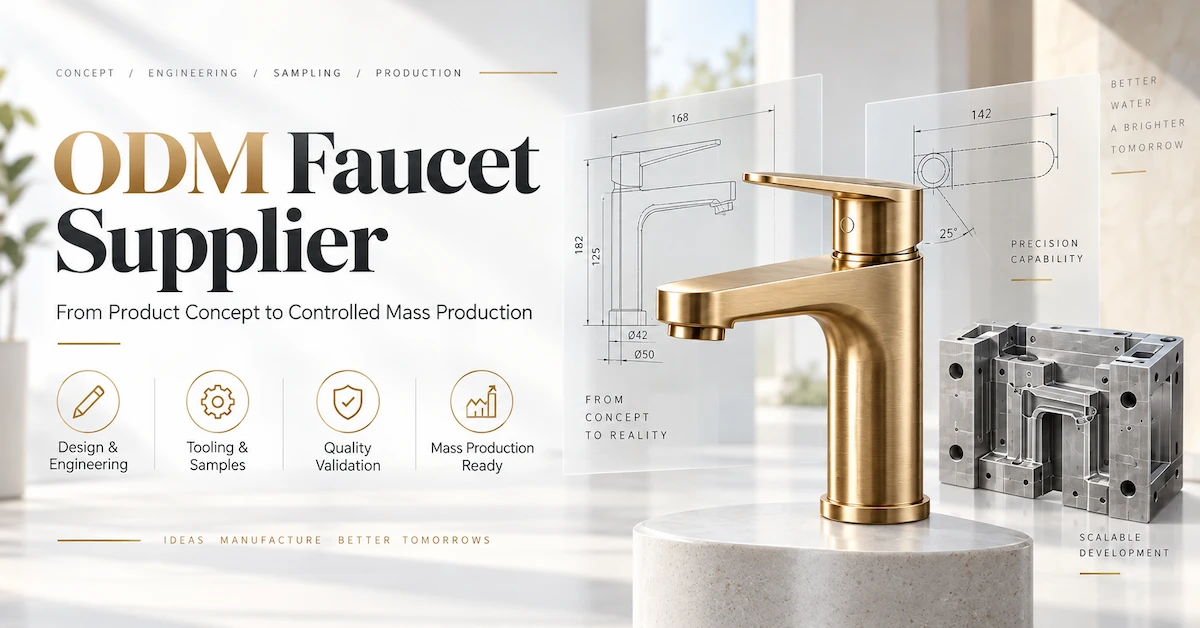
Casting and Forming
These processes influence the basic faucet body and structural consistency.
Machining
Machining controls threads, sealing surfaces, cartridge positions, and other critical dimensions.
Polishing and Surface Preparation
These processes affect the substrate before decorative finishing.
Surface Finishing
Finishing influences color, gloss, appearance, and consistency between units.
Assembly
Assembly determines whether the approved cartridge, hoses, aerator, seals, and mounting parts reach the final product.
Testing and Inspection
Inspection provides the final opportunity to identify dimensional, functional, appearance, or packaging problems before shipment.
AG Valve publishes information about its manufacturing and inspection capabilities on the company profile. Hotel buyers should use those capabilities as questions for project-specific confirmation rather than assume that every test automatically applies to every faucet model.
Use a Mock-Up Room Before Releasing the Full Project Quantity
For hospitality projects, a mock-up bathroom is one of the most useful approval tools.
A representative installation can reveal problems that are difficult to detect from drawings alone.
The project team can check:
- Faucet-to-basin geometry
- Splash behavior
- Handle clearance
- Shower control position
- Hose routing
- Bathtub faucet reach
- Vanity mounting access
- Finish coordination
- Cleaning access
- Service accessibility
The approved mock-up should then be connected to the final model numbers, drawings, component configurations, finish references, and packaging requirements.
This turns a design sample into a production standard.
Quality Control Should Be Defined Before Production
“Strict QC” is not a useful hotel procurement specification unless the supplier and buyer agree on what will actually be checked.
Depending on the product, the inspection plan may include:
- Dimensions
- Appearance
- Assembly
- Handle operation
- Leakage
- Outlet switching
- Accessories
- Finish
- Packaging
- Labeling
When specific material, life-cycle, coating, or corrosion-related requirements matter, buyers should agree on the test method, conditions, and acceptance criteria rather than accepting only a generic test name.
Current documentation should also be checked against the exact model and destination market. A certificate displayed at company level should not automatically be assumed to cover every customized faucet or hotel project configuration.
Plan Spare Parts Before the Hotel Opens
Spare-parts planning is often postponed until after the rooms are installed, but hospitality buyers benefit from addressing it during sourcing.
For each product family, identify which components can realistically require replacement during normal maintenance.
Depending on the model, this may include:
- Cartridge or valve components
- Aerators
- Flexible hoses
- Hand showers
- Shower hoses
- Diverter components
- Seals
- Mounting hardware
The supplier should provide clear identification so the hotel's maintenance team does not need to identify a replacement from photographs several years later.
A small opening stock of clearly identified service parts can be more useful than storing complete faucets without knowing which components are interchangeable.
Compare Hospitality Bathroom Supply Models Before Choosing a Partner
Hotels can source bathroom faucets in several ways. No single model is automatically best for every project.
| Supply Model | Main Advantage | Main Risk | Suitable Situation |
|---|---|---|---|
| Individual product purchasing | Flexibility to select products independently | More coordination between suppliers | Small or highly customized projects |
| Coordinated faucet supplier | Easier control across multiple faucet categories | Requires careful product-level approval | Hotels standardizing several bathroom faucet types |
| Private-label program | Stronger brand and product control | More packaging and specification management | Hospitality distributors or hotel groups |
| OEM development | Greater product differentiation | Higher technical coordination | Defined programs with clear product requirements |
The appropriate route depends on project scale, differentiation needs, maintenance strategy, budget, and expected repeat demand.
Plan Capacity and Phased Deliveries Around the Construction Schedule
Hotel purchasing rarely ends with one delivery date.
Bathroom products may need to arrive according to room installation, building zones, project phases, or handover priorities.
A useful supply schedule separates:
- Sample preparation
- Technical approval
- Finish approval
- Packaging approval
- Production
- Final inspection
- Dispatch
- Project delivery phases
The supplier should confirm commercial conditions for the actual configuration rather than relying on a general factory lead-time statement.
Likewise, MOQ and production timing may vary according to model, finish, customization, packaging, and quantity. Buyers should request project-specific terms instead of assuming one standard applies across the full bathroom range.
Evaluate Total Project Cost, Not Only Faucet Unit Price
A hotel faucet that appears inexpensive can become costly if it creates installation delays, specification changes, replacement problems, or additional site work.
Total purchasing cost can include:
| Cost Area | What Buyers Should Consider |
|---|---|
| Product | Agreed faucet configuration |
| Accessories | Hoses, mounting parts and required components |
| Customization | Finish, branding or project changes |
| Samples | Mock-up and approval samples |
| Packaging | Project-specific or private-label packaging |
| Inspection | Additional agreed inspection requirements |
| Spare parts | Opening maintenance stock |
| Logistics | Transport and phased deliveries |
| Installation risk | Rework caused by incompatibility |
| Maintenance | Replacement availability after opening |
The most useful quotation is therefore not necessarily the one with the lowest faucet price. It is the quotation with the clearest scope and the fewest unresolved assumptions.
OEM and Private Label Options for Hospitality Projects
Hotel groups, bathroom brands, and hospitality distributors may need products with their own identity.
A private-label or OEM program can potentially involve:
- Logo application
- Finish selection
- Packaging
- Labels
- Instructions
- Accessory combinations
- Selected component changes
- Product development
Buyers should distinguish branding changes from engineering changes.
A new carton design is different from modifying a valve, mounting system, spout geometry, or internal component. Engineering changes may require additional drawings, samples, testing, or other approval work.
Buyers considering customized hospitality products can review the broader AQBATH faucet catalog before deciding whether an existing platform or customized route is more suitable.
What Should a Hotel Buyer Include in an RFQ?
A detailed RFQ helps a hospitality bathroom supplier understand the project before providing pricing.
Include:
- Hotel type and project location
- Target market
- Number of rooms
- Room types
- Basin drawings
- Vanity details
- Shower arrangement
- Bathtub arrangement where applicable
- Required finishes
- Connection requirements
- Quantity by product
- Spare-parts expectations
- Packaging requirements
- OEM or branding requirements
- Required documentation
- Installation schedule
- Planned delivery phases
When drawings are available, send them with the inquiry instead of relying only on product reference images.
Hotel and project buyers can use the AQBATH Contact Us page to submit project requirements for product evaluation.
Frequently Asked Questions
What is a hospitality bathroom supplier?
A hospitality bathroom supplier provides bathroom products for hotels, resorts, apartments, and related commercial accommodation projects. Depending on the supplier, this may include faucet products, customization, technical support, packaging, spare parts, and project supply coordination.
What should hotels check before choosing bathroom faucets?
Hotels should check installation compatibility, dimensions, components, finish, connections, maintenance access, documentation, spare parts, and repeat-order requirements before approving mass production.
Why is a mock-up bathroom important?
A mock-up allows the project team to test actual basin compatibility, faucet reach, splash, mounting access, shower layout, finish coordination, and serviceability before the specification is repeated across many rooms.
Should all hotel bathrooms use the same faucet model?
Not necessarily. Different room types may require different basin heights, bathtub configurations, shower systems, or installation arrangements. Standardization should be based on actual room conditions.
What spare parts should hotel buyers prepare?
The list depends on the selected products but may include cartridges, aerators, hoses, seals, shower components, diverter parts, and mounting hardware. The supplier should help identify the exact service parts for each approved model.
Can hotel bathroom faucets be private labeled?
Private-label requirements can be discussed according to the selected product and project scope. Branding may involve logos, packaging, labels, instructions, finishes, and other agreed customization.
How should hotels control faucet finish consistency?
Approve a reference finish sample, identify critical visible surfaces, compare coordinated bathroom products together, and maintain the reference for future orders.
What quality documents should buyers request?
Request documents relevant to the exact model and target market, together with agreed inspection or test information. Do not assume that a general company certificate automatically applies to every product.
How should hotel projects manage phased deliveries?
Provide the supplier with the construction and installation schedule, then divide production and dispatch according to the agreed project phases where appropriate. Confirm each phase commercially before relying on the schedule.
How can I request a hospitality bathroom faucet quotation?
Prepare room quantities, product applications, drawings, installation conditions, finish requirements, target market, project schedule, customization needs, and spare-parts expectations. Submit these details through AQBATH Contact Us for project-specific review.
Conclusion
Choosing a hospitality bathroom supplier is a project-control decision rather than a simple product purchase. Hotels, resorts, developers, procurement companies, contractors, and hospitality distributors should coordinate bathroom faucets with the actual basin, vanity, shower, bathtub, plumbing, and maintenance conditions before approving bulk supply.
A strong hospitality sourcing process establishes room types, controlled product specifications, approved samples, finish references, inspection requirements, spare-parts plans, and phased delivery expectations before mass installation begins. Buyers can review the AQBATH product range, learn more about manufacturing capabilities through About Us, and access available materials through the product catalog. For a project-specific assessment, submit room layouts, quantities, installation requirements, finishes, customization needs, and delivery schedule through Contact Us